A Simple, Smart Solution
Period poverty can prevent people from attending school, work or job interviews. It can also lead to psychological stress, including shame and depression, and health issues like urinary or reproductive infections — especially for those in shelters.
The Period Project, created by CHOP trainees, social workers, volunteers and HHI leaders with support from a CHOP Cares Community Grant, provides “period packs” with supplies for a full cycle, promoting health, dignity and opportunity.
Helping Thousands Every Year
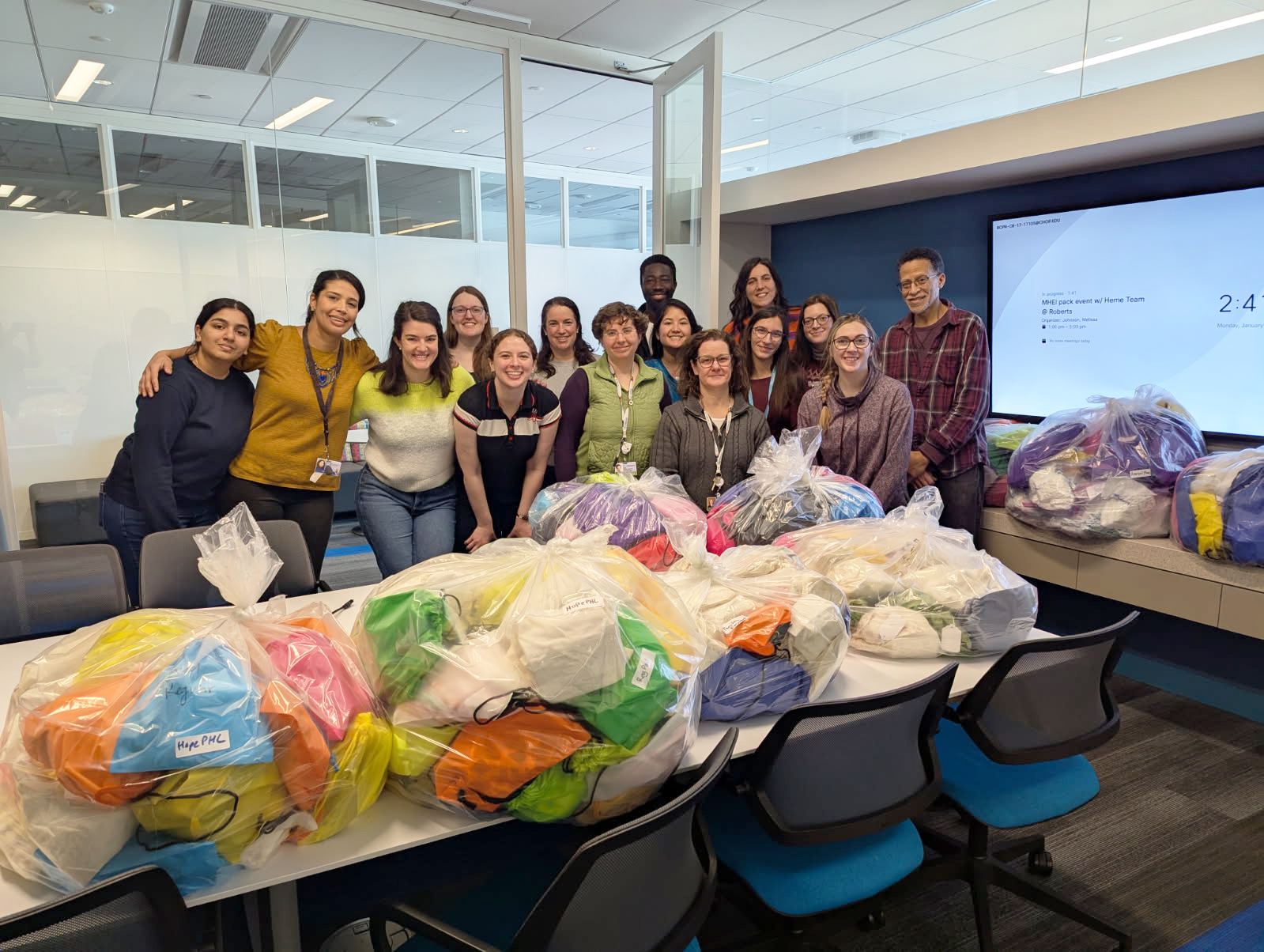
The initiative has provided supplies for more than 10,000 periods. In a recent survey, 96% of participants said the packs help them attend school, work or job interviews.
“Most shelter residents arrive literally with just the clothes on their back and no means of income. Therefore, when their menstrual [cycle] comes on, they are in need of products. Having products on hand eliminates any shame or stigmas one may feel.”— Residential services manager at HHI partner shelter
Helpers Make It Happen
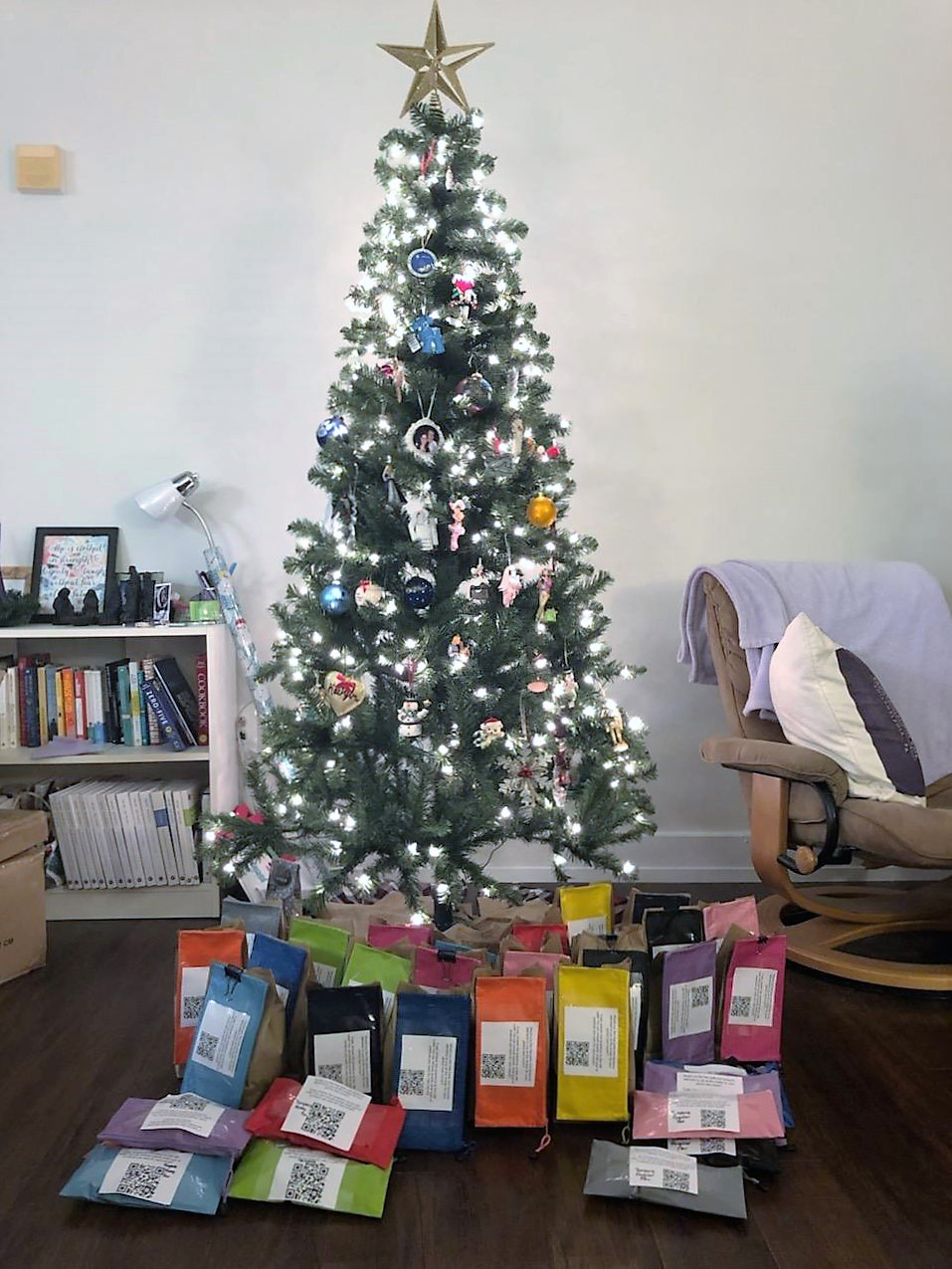
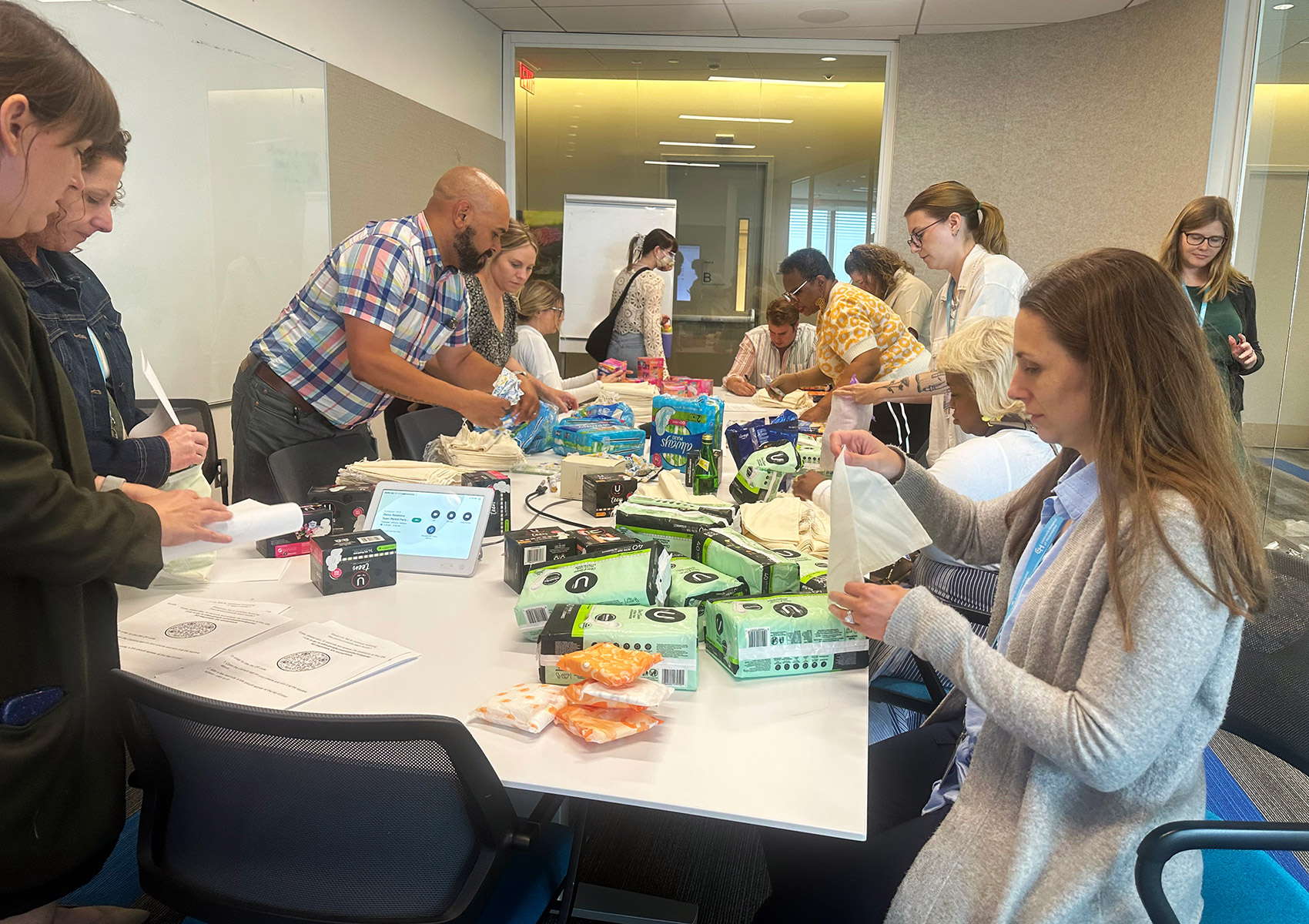
The Period Project relies on monetary donations, period product drives and in-kind donations to stay stocked and sustainable. Teams across CHOP and external partners support the effort by collecting donations and assembling kits at monthly volunteer events.
The project has also received support from the CHOP Foundation’s Helping Hands Community Care Challenge, with corporate volunteers joining in. These changemakers show how small actions can fight big inequities.
Promoting Wellness Equity to Help Kids BE-WEHL
Mental health is vital to overall well-being, and mind-body practices are effective tools for enhancing it. Recognizing this, Children's Hospital of Philadelphia (CHOP) launched the Integrative Health (IH) Program 10 years ago to incorporate wellness practices such as yoga, massage, aromatherapy and acupuncture into patient care.
Now, IH is bringing the benefits of these practices into the community through their Behavioral Health — Wellness Equity for a Healthy Life (BE-WEHL) program. Learn More
Launched in 2020
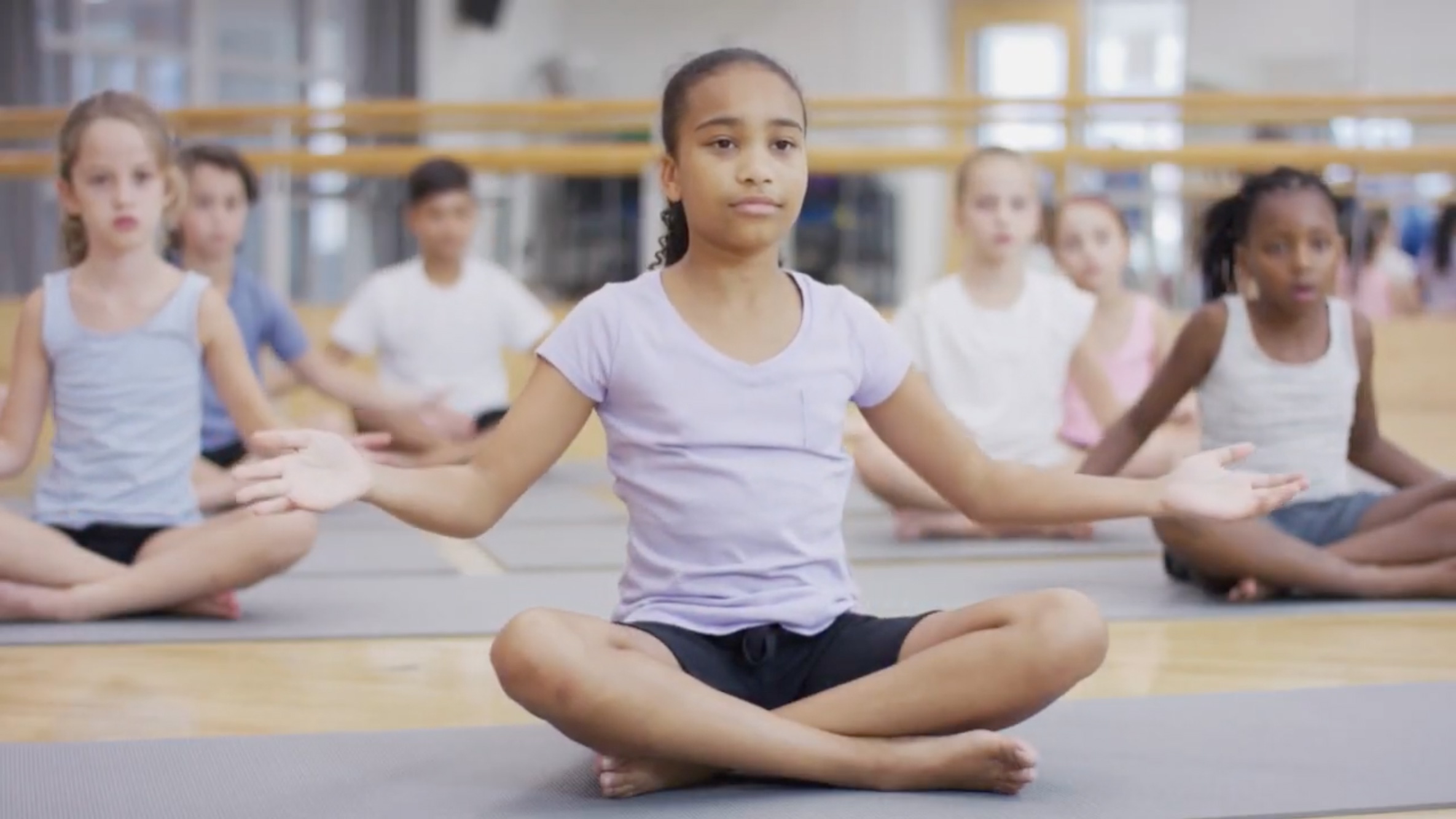
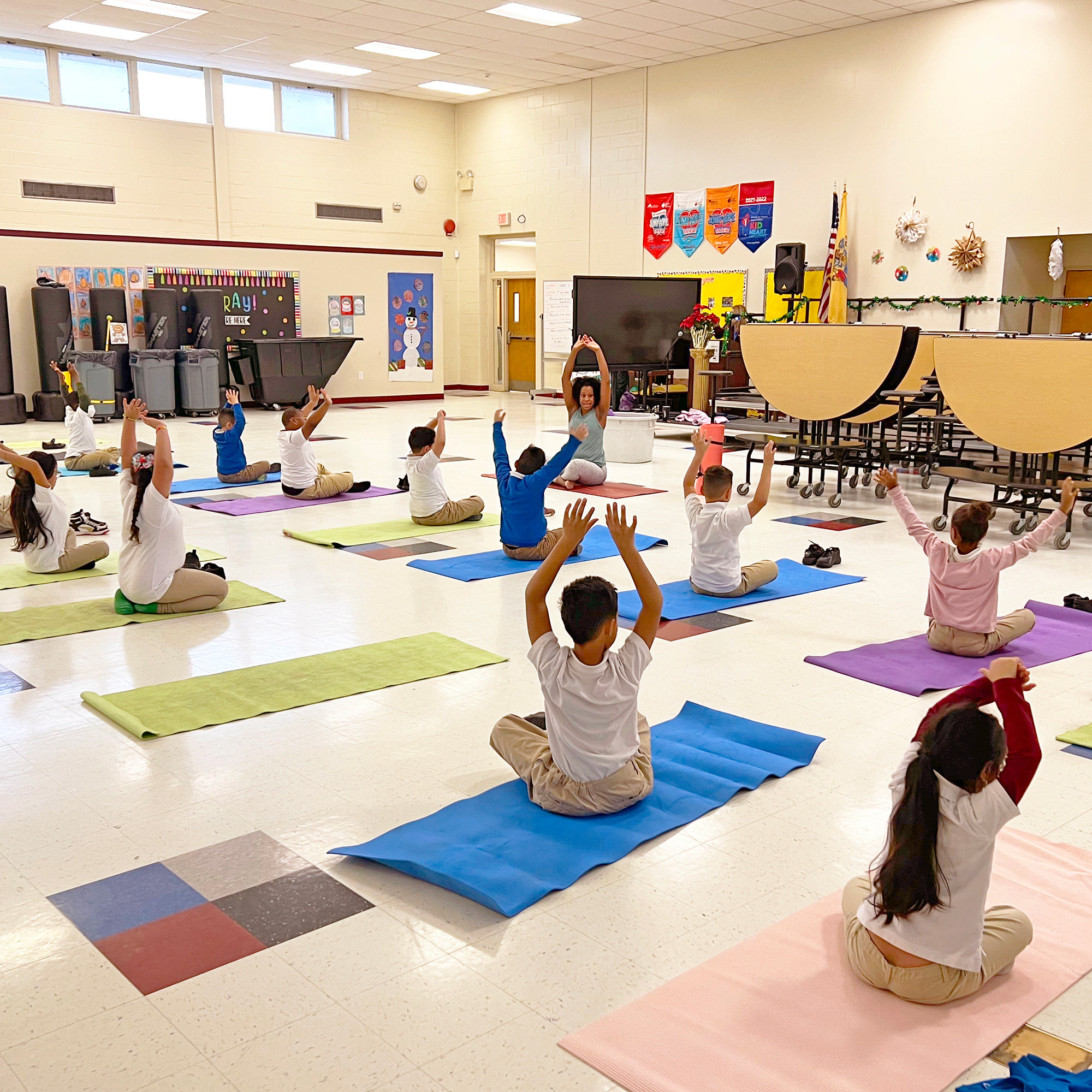
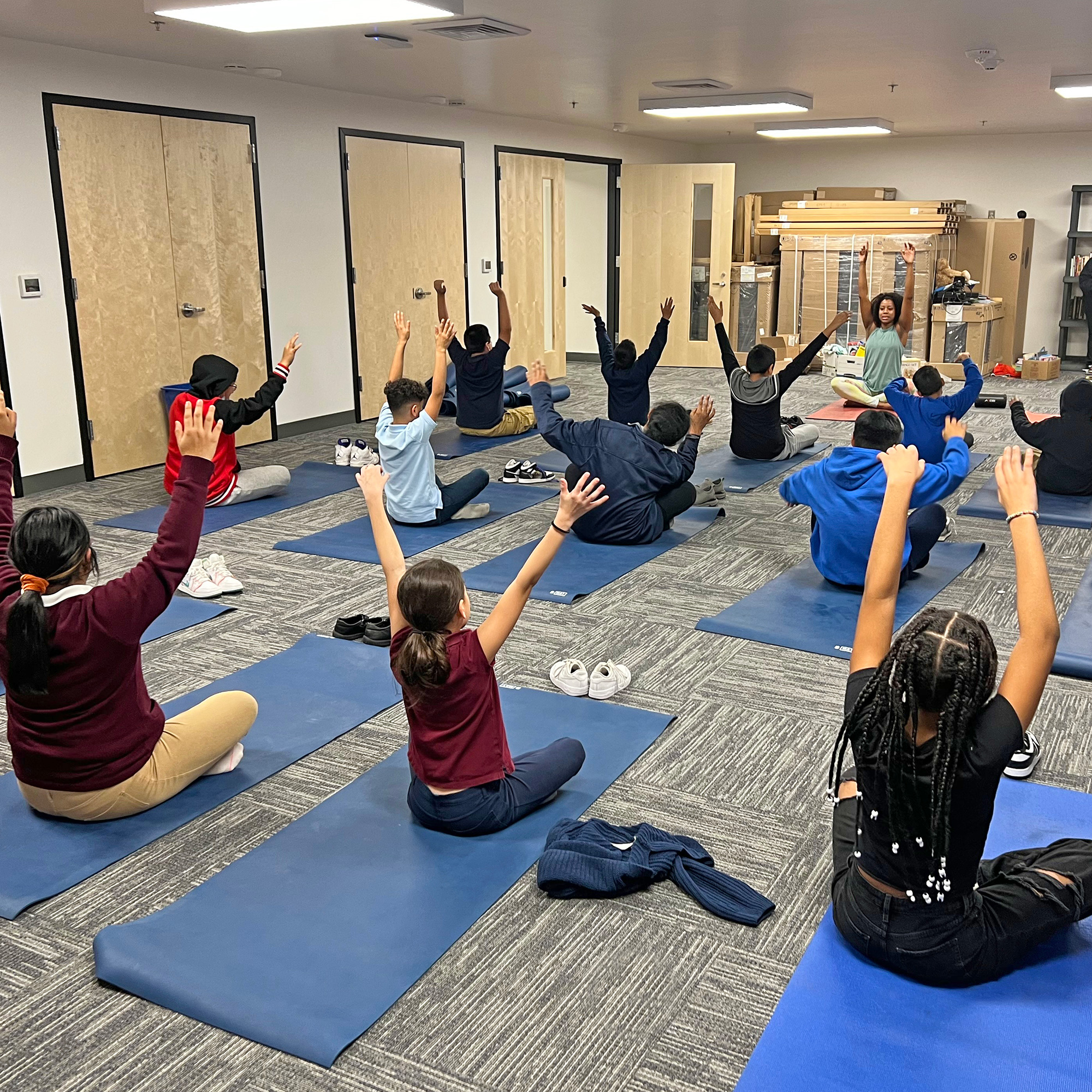
The BE-WEHL program offers a comprehensive seven-session curriculum designed to help children and families in under-resourced communities manage stress and cope with life's challenges. The curriculum covers mindfulness, nutrition, sleep, physical activity, yoga, self-massage, breathwork, nature and progressive muscle relaxation.
It was developed by experts from Integrative Health to address the unique needs of communities with higher levels of trauma and limited access to behavioral health professionals for children and adolescents.
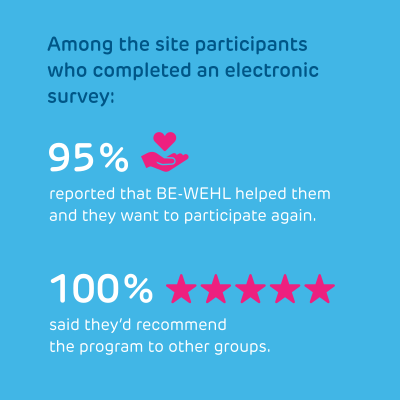
By the Numbers
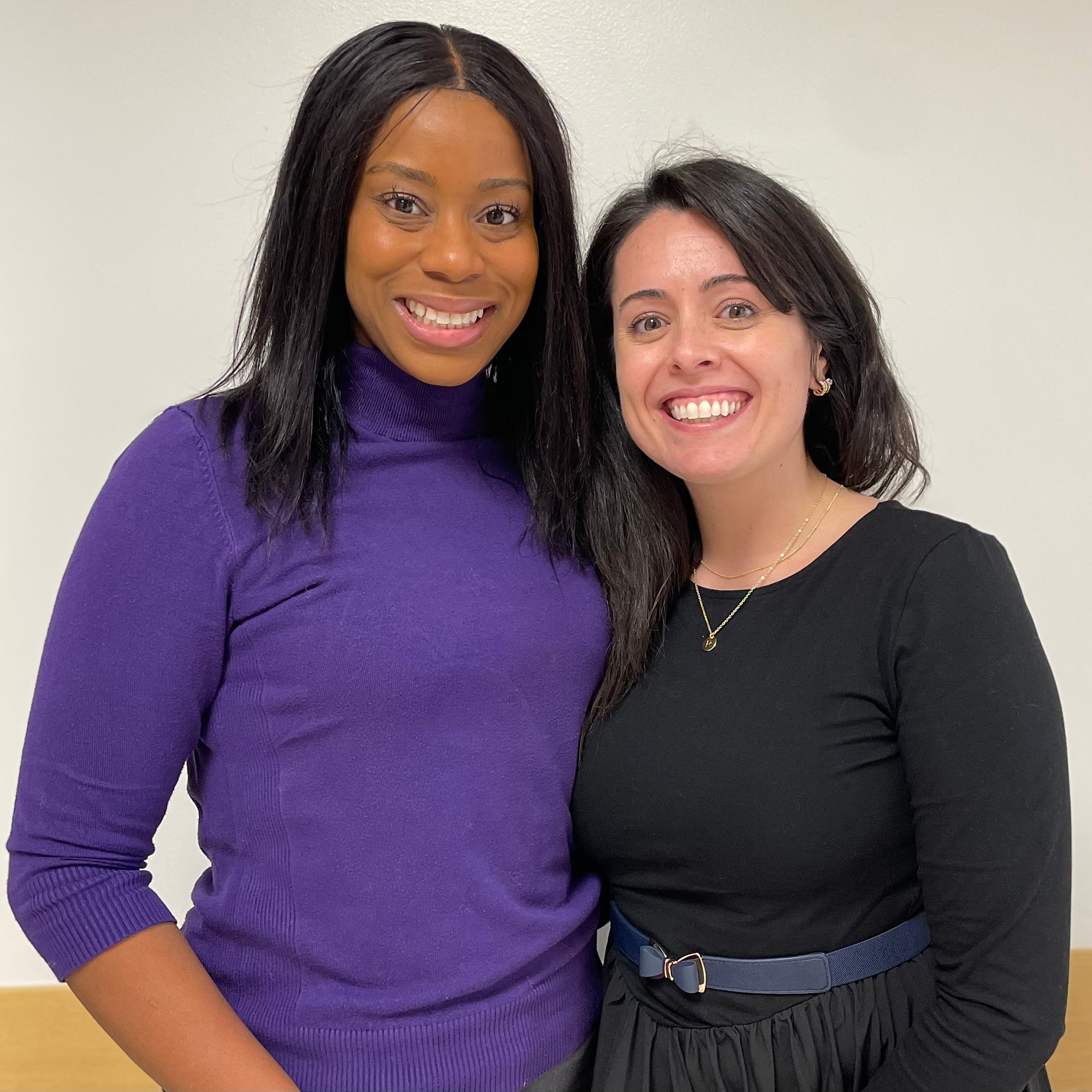
BE-WEHL is unique in that we're not talking about a disease-specific thing. The focus is on stress, wellness and mindfulness. That allows us to be flexible and adapt the program, while always focusing on children.
Complementary therapies, like yoga, massage, aromatherapy and acupuncture, are traditionally accessed by affluent populations, so as a team we really wanted to find a way to systematically make these practices more available to populations living in underserved areas.
Growth Since Launch
BE-WEHL has continuously evolved to maximize its impact and sustainability. Initially focused on offering one-on-one virtual classes for CHOP patients with behavioral health challenges and their families, the program expanded in 2022 with support from CHOP's Office of Community Impact. This funding enabled BE-WEHL to bring its curriculum into elementary schools, reaching children ages 5-14.
More recently, the program introduced professional training workshops empowering educators at early childhood centers to adopt wellness practices to manage their own stress and teach these strategies to children.