Strengthen
Discover how together we are strengthening communities — aligning resources and systems for a healthier future.
When Seconds Matter, So Does Community
Sudden cardiac arrest strikes without warning — even in healthy children and teens — leaving families forever changed. Each year, about 23,000 youth in the U.S. experience sudden cardiac arrest, with nearly 10,000 lives lost. Survival depends on who is nearby and actions taken in the first moments. Every minute of delay decreases survival by 10%.
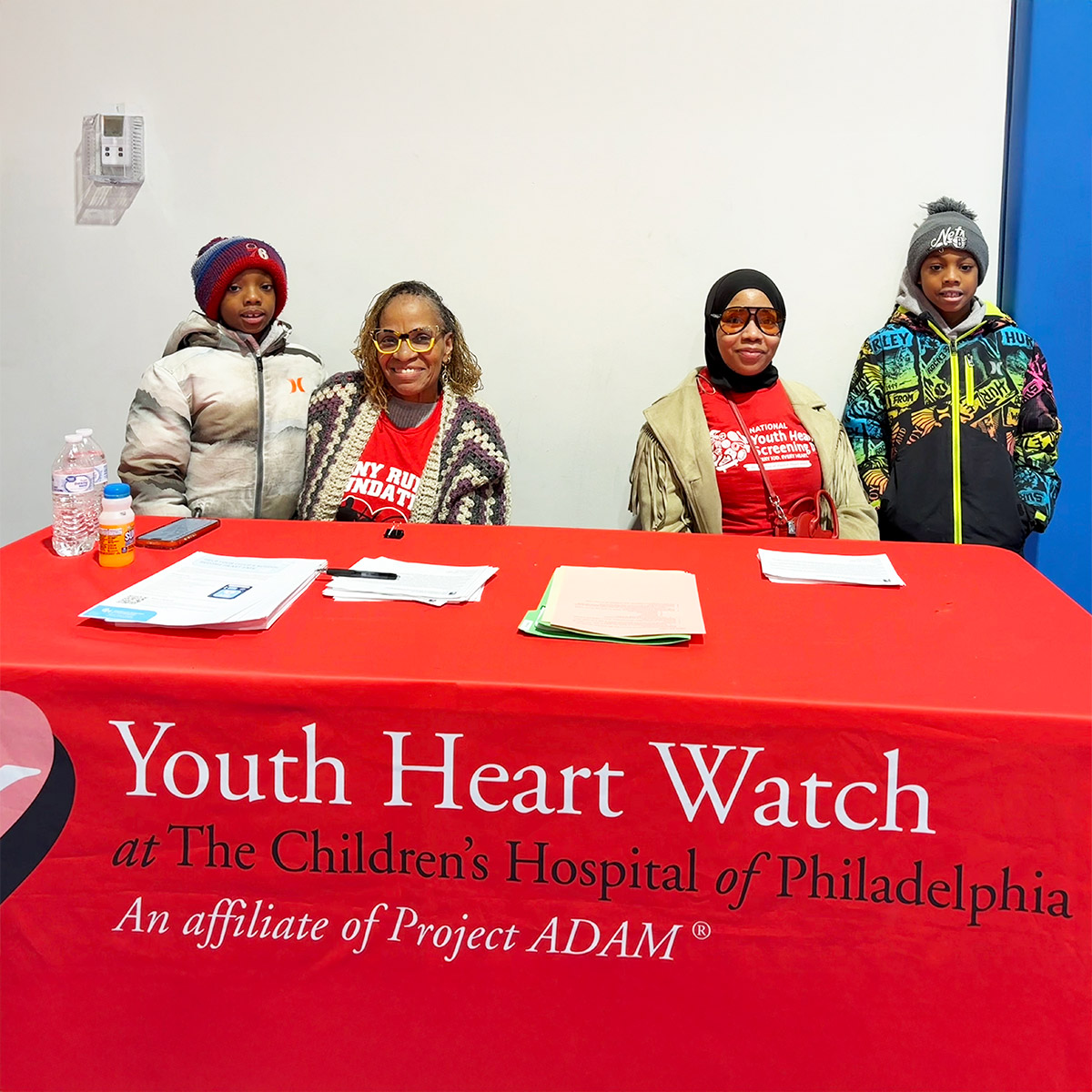
Children’s Hospital of Philadelphia’s Youth Heart Watch equips communities with training and tools to act when every second counts. Learn More
Bringing Lifesaving Skills Where Kids Gather
Youth Heart Watch brings prevention into schools and community spaces across Pennsylvania and New Jersey. Events include emergency drills, heart screenings, and hands-on CPR and AED training.
Free resources, expert coaching, and a lending library of manikins (practice dummies used for CPR) and AED trainers make preparation accessible wherever children learn and play.
Protecting Young Hearts Early
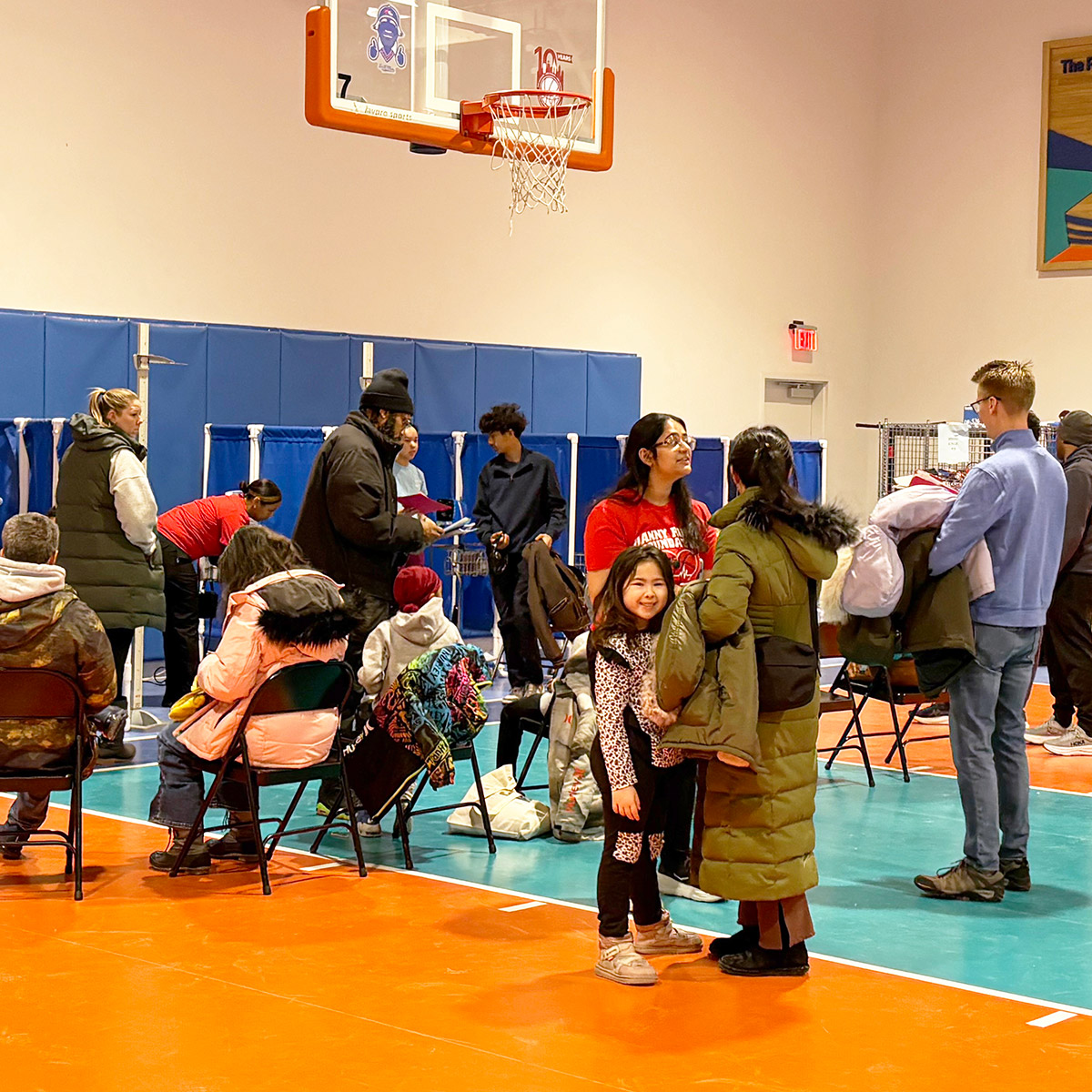
Prevention also involves identifying heart conditions before an emergency happens. Youth Heart Watch partners with community organizations to offer screenings where children and teens gather.
More than 5,000 children have been screened, with families connected to follow-up care when needed. Screenings are often paired with CPR demonstrations and health resources.
Healthy Kids Running Series Brings Movement and Joy to Local Families
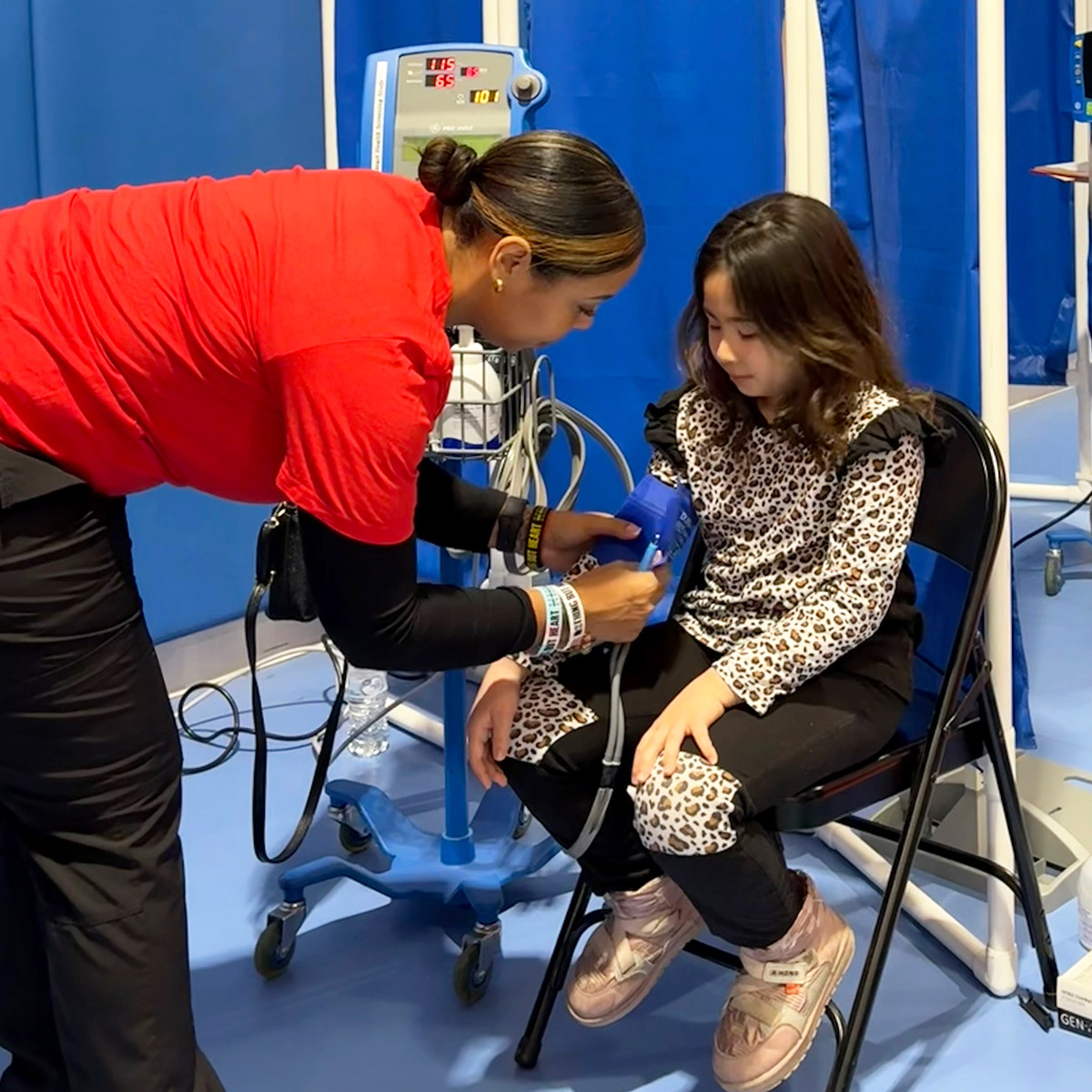
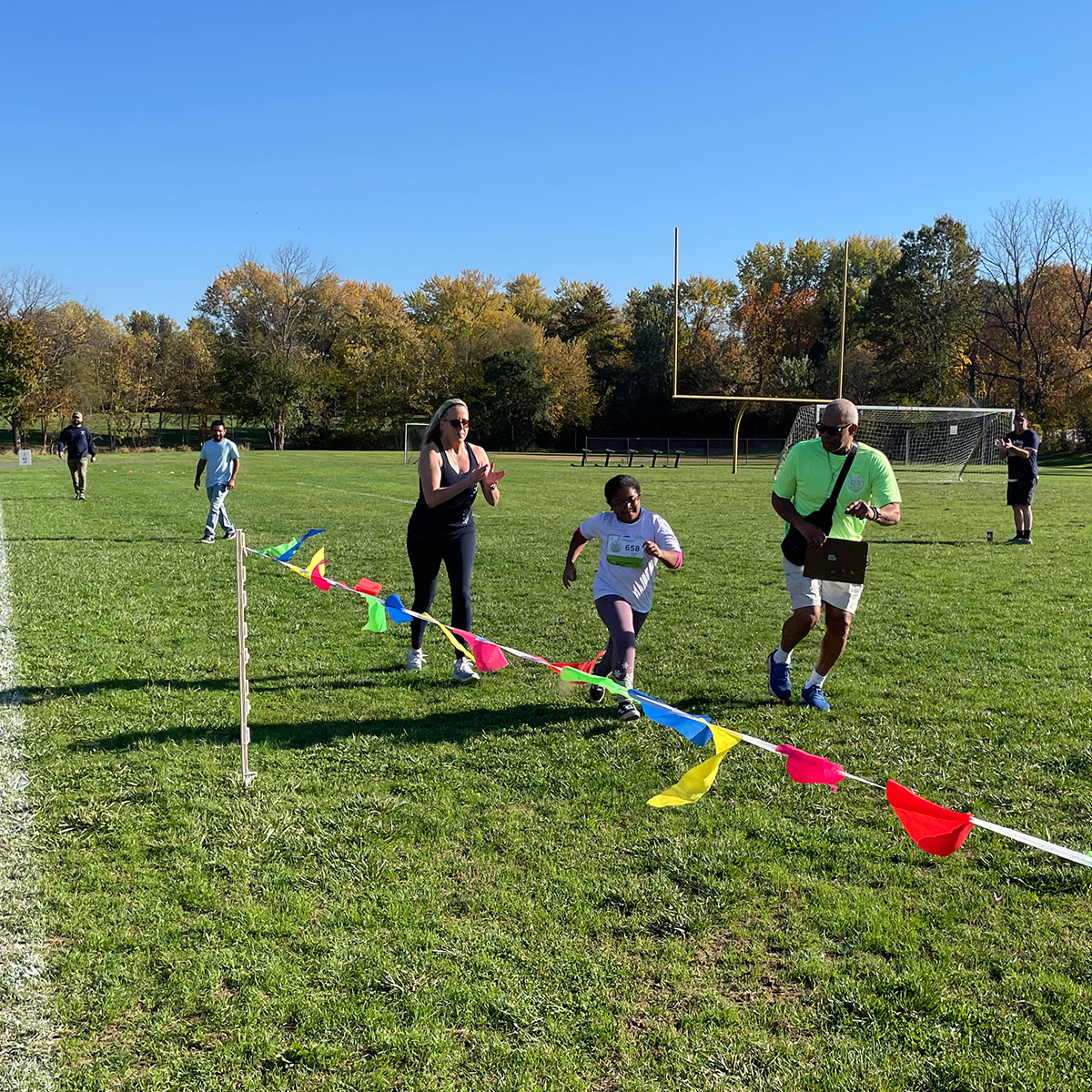
On weekend mornings, West Philadelphia and Norristown come alive with music, cheering and the thump of sneakers.
What looks like a neighborhood festival is the Healthy Kids Running Series (HKRS), a national nonprofit that creates inclusive, entry-level running experiences for kids across the U.S. CHOP leads and operates the HKRS programs in these two area communities so children ages 2–18 can discover the joy of running while building confidence and healthy habits. Learn More
Making Movement Fun, Affordable and Within Reach
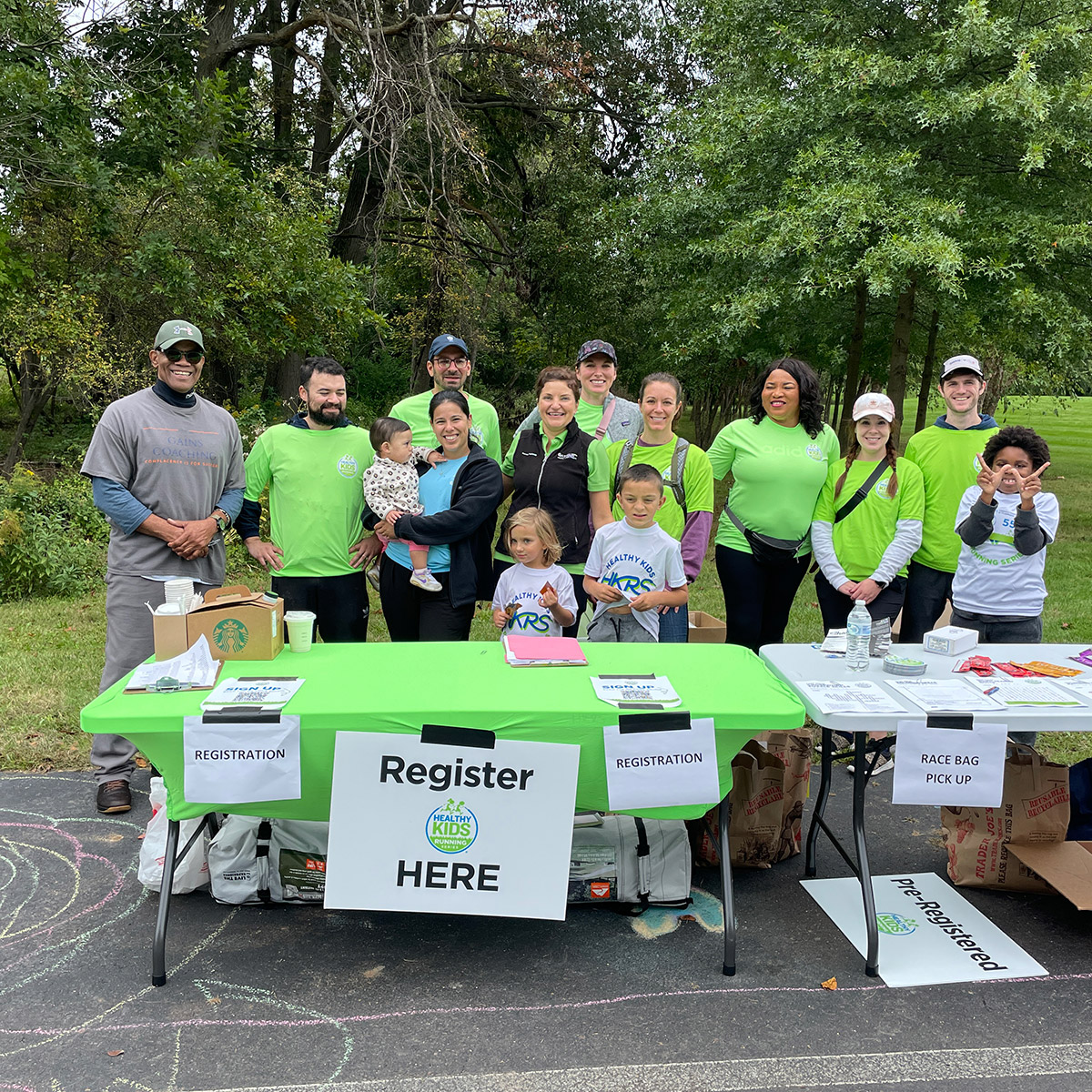
Established through CHOP Cares Grant funding, the HKRS sites in West Philadelphia and Norristown aim to remove cost barriers and keep participation within reach for families.
Guided by Community Health Needs Assessment learnings, CHOP makes participation accessible by reducing the national fee of $45–$50 to just $5. Each child receives a shirt, race bibs, a swag bag, snacks and a finisher medal, ensuring runners feel welcomed and supported, and that families with multiple children can easily participate.
Volunteers Bring Energy, Structure and Heart
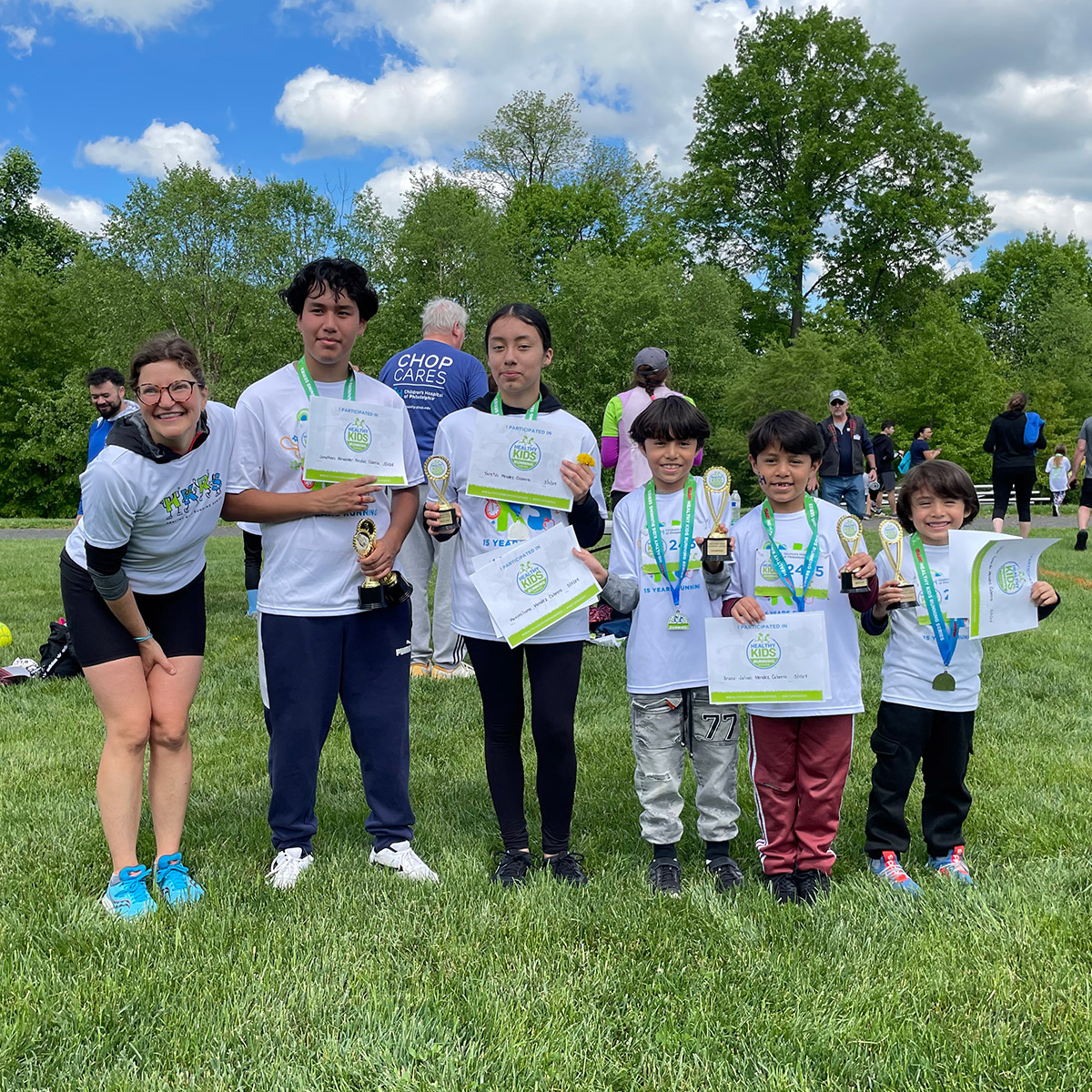
Both CHOP sites are entirely volunteer-run, with about 10 CHOP employee volunteers per location each race day. Volunteers arrive early to measure distances, set up courses, time races, guide families, and, most importantly, cheer every child along the course and across the finish line.
Older participants earn weekly points toward a season trophy, boosting motivation. A local youth DJ — who first got involved with the program as a high school student — keeps spirits high, while longtime volunteers lead warm-ups and confidence-building chants that help every child feel ready to give it their all.
Bridging the Summer Hunger Gap
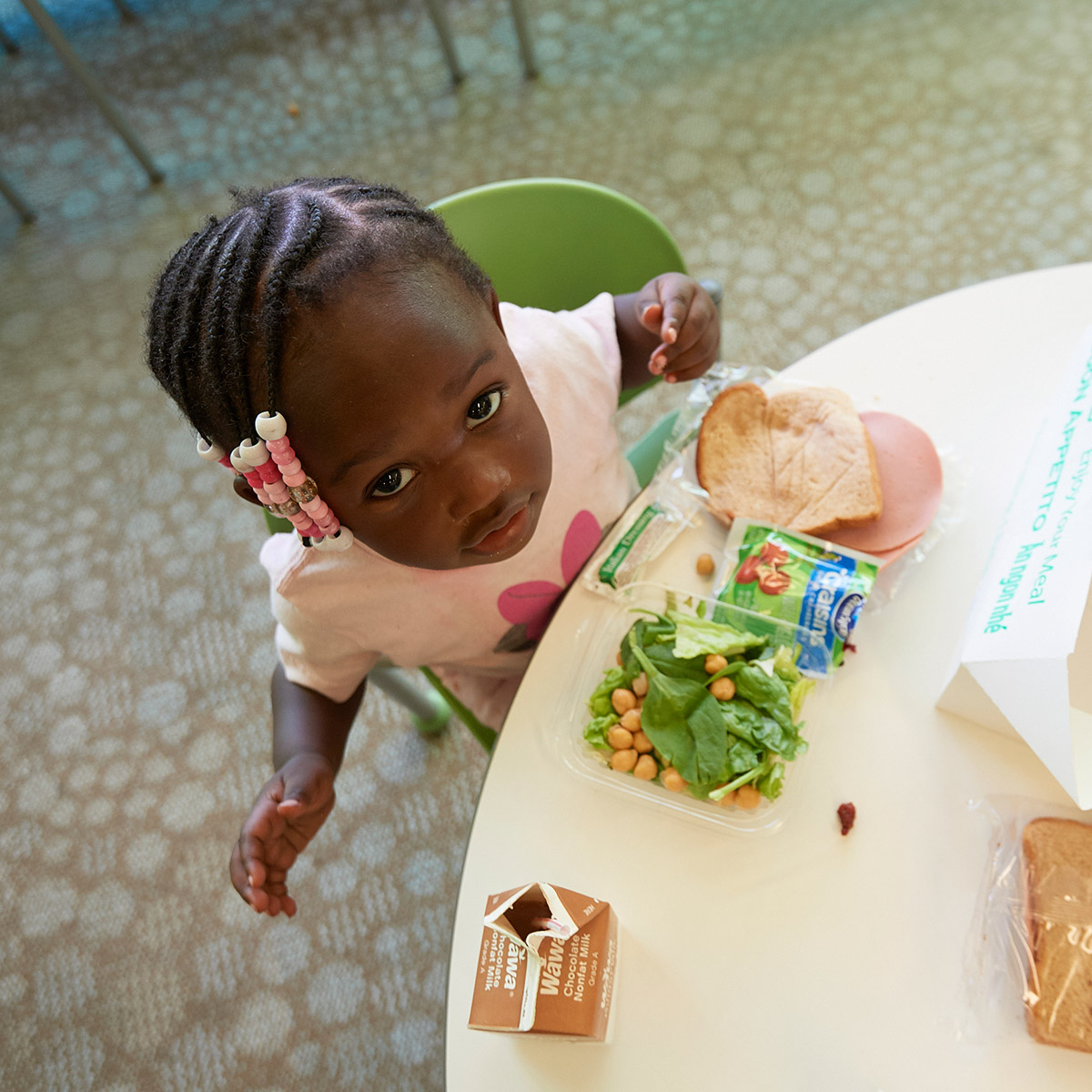
Across the U.S., millions of children rely on free school meals, but when summer starts, that safety net disappears. Though the U.S. Department of Agriculture (USDA) funds summer meal programs, many families don’t know they exist or how to access them. In Pennsylvania, only one in 12 eligible children receives summer meals.
Children’s Hospital of Philadelphia (CHOP) recognized how critical it is to fill that gap, to help ensure no child goes hungry when school is out. Learn More
Where It Began
Complete Eats started in 2017 when Dr. Danielle Cullen and her team launched a small pilot offering free summer meals right in CHOP’s Emergency Department, meeting families where they already were.
The effort quickly proved that providing meals in a clinical setting could reach children who might otherwise miss out. That success became the foundation for a program now thriving across CHOP’s Care Network.
Growing Through Partnership
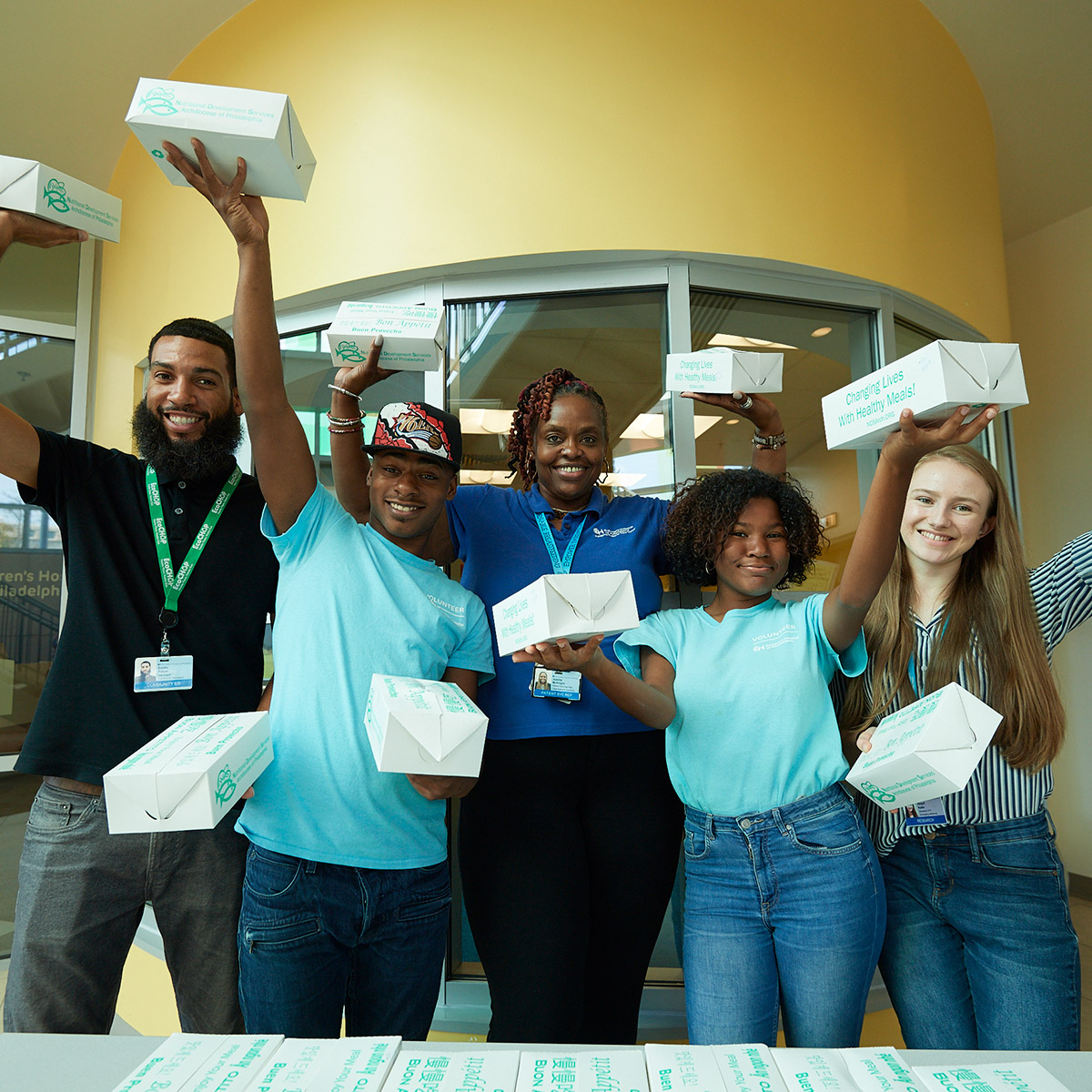
Strong partnerships made growth possible. Through the USDA Food Service Program, in collaboration with the Pennsylvania Department of Education and Nutritional Development Services of the Archdiocese of Philadelphia, CHOP expanded Complete Eats from the pilot in the Emergency Department to a total of nine CHOP Care Network sites.
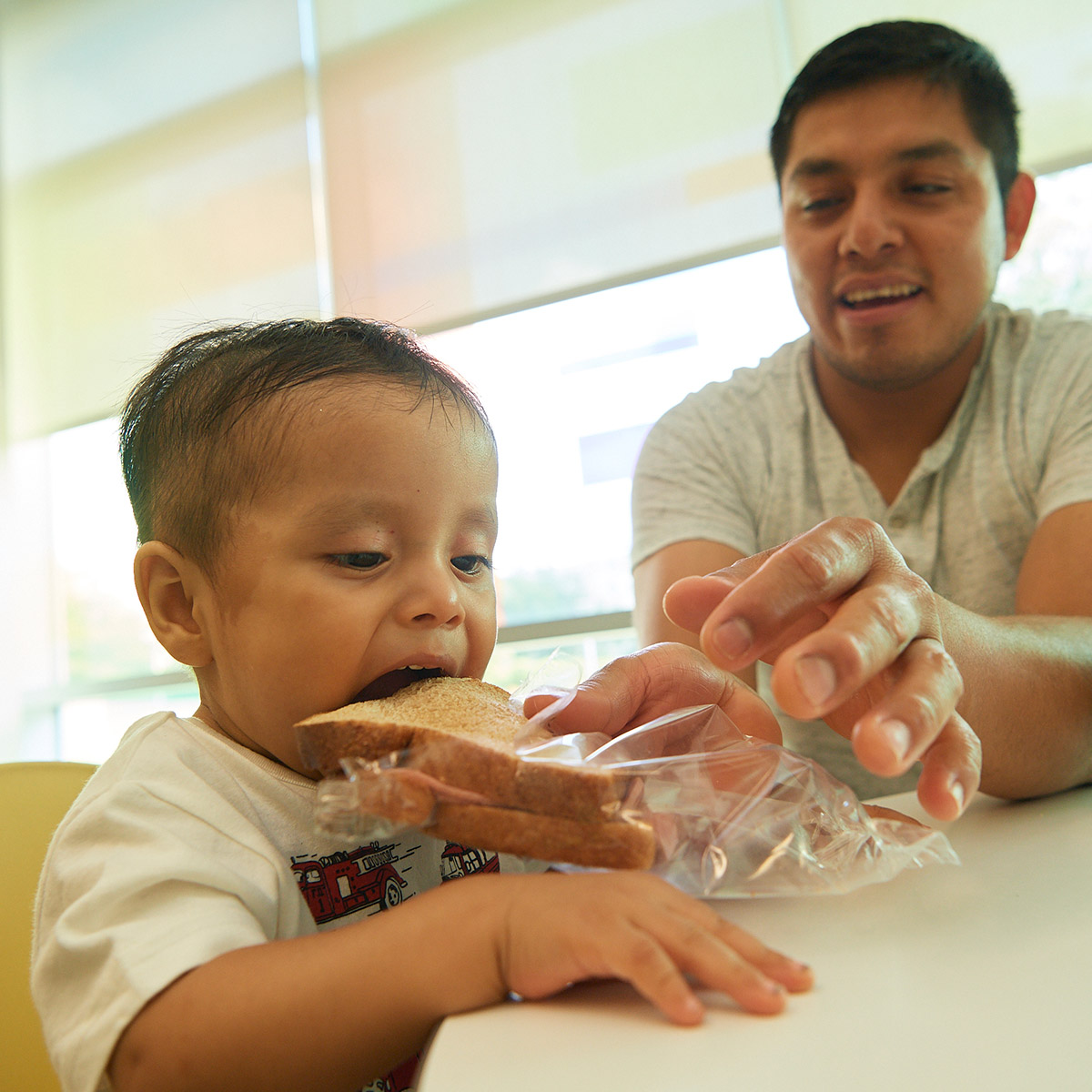
Families can stop by any site for a healthy, free breakfast or lunch for children of all ages regardless of whether they are CHOP patients — no forms, no questions.
Cooking Up Healthier Futures
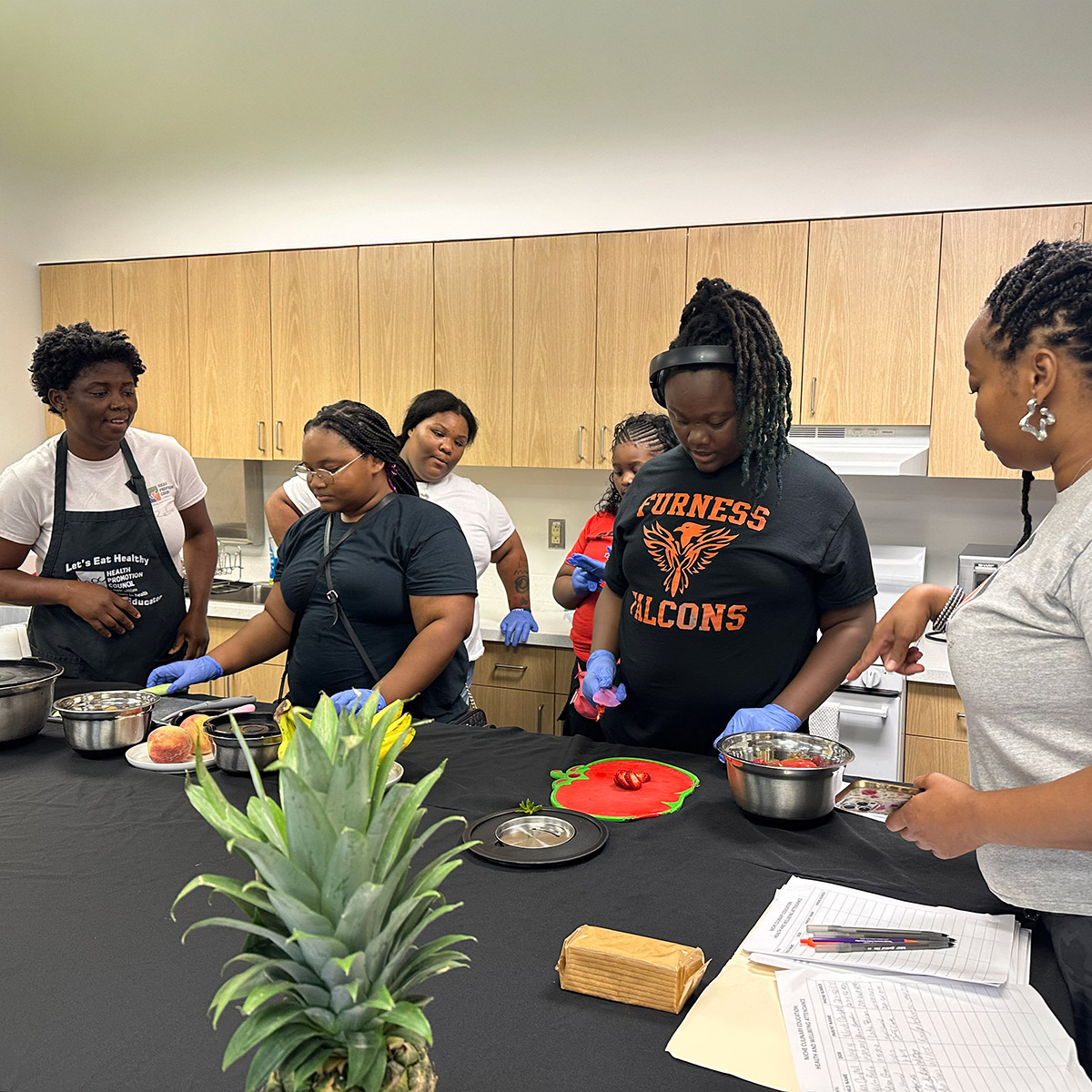
In a bright teaching kitchen on Market Street, laughter and the scent of sizzling vegetables fill the air. Here, children and parents aren’t just learning recipes, they’re discovering how small changes can make a big difference in their health.
At Children’s Hospital of Philadelphia’s Health and Well-Being Clinic, care extends beyond checkups. At the clinic, families build lasting habits in eating, movement and well-being. Its Nutrition Is Culinary Healthy Eating (NICHE) program brings those lessons to life through hands-on cooking. Learn More
From Clinic to Kitchen
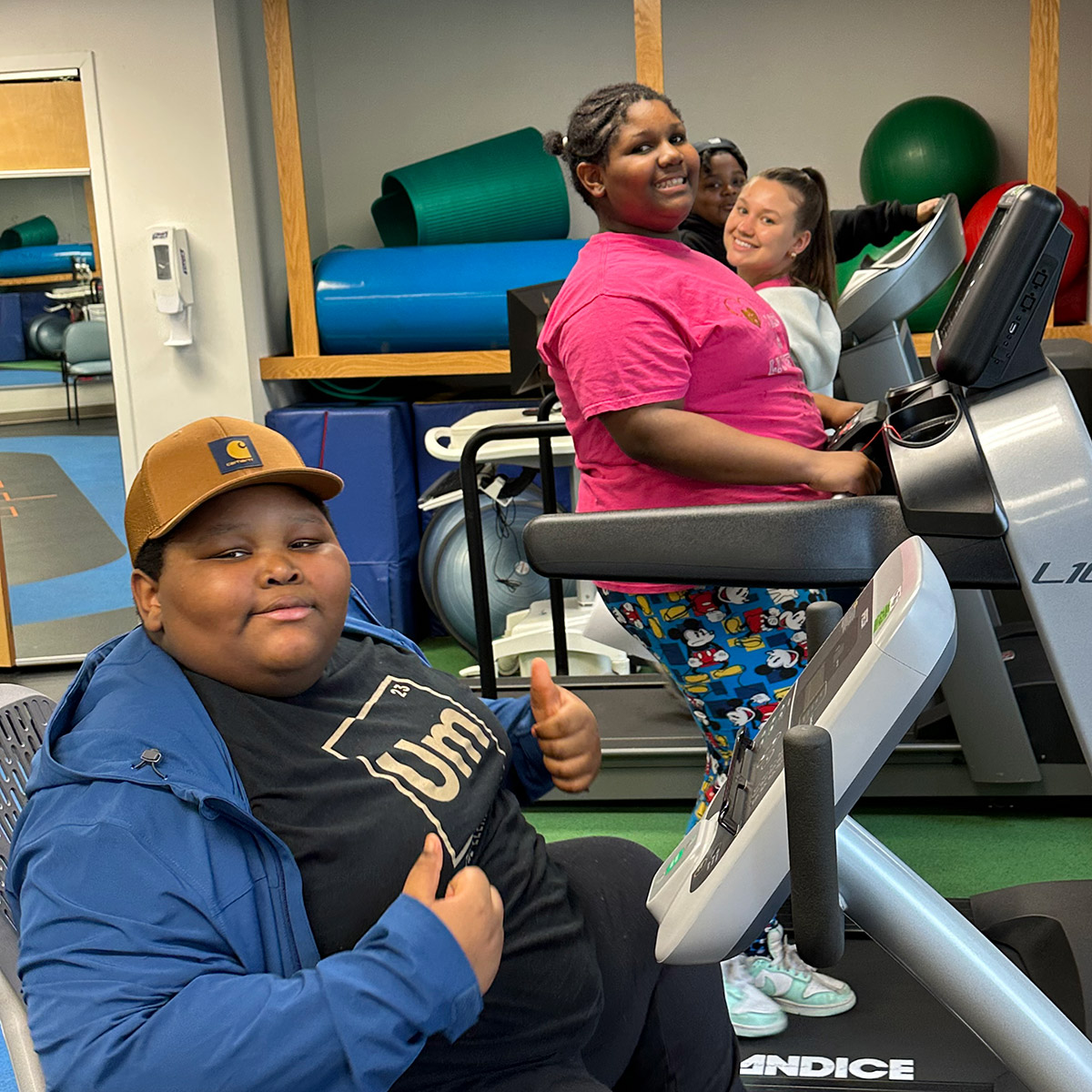
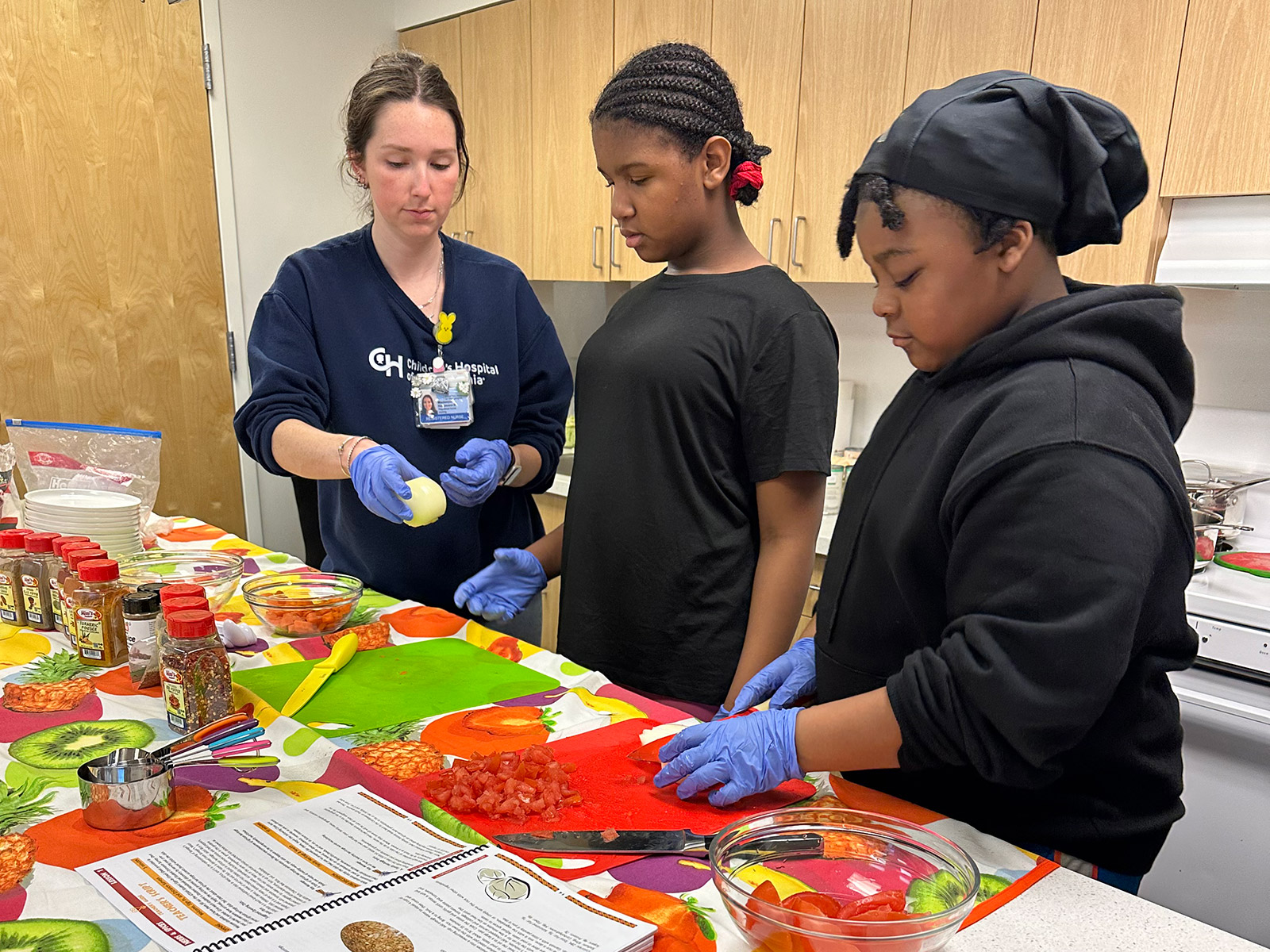
Each week, families gather in the clinic’s teaching kitchen for NICHE sessions, where they learn, cook and share healthy meals together. During the first half of each session, children build confidence in the teaching gym while parents explore nutrition and meal prep with a culinary educator. The children then join their parents to slice, mix and taste what they make — turning clinic lessons into everyday practice.
The first classes, held in October 2024, quickly filled and inspired strong word-of-mouth interest.
Food as Medicine, Learning as Connection
Many NICHE families also receive monthly food bags and deliveries through CHOP’s Food Pharmacy, which screens every clinic family for food insecurity. NICHE helps them make the most of those groceries, showing how to turn fresh fruits, vegetables and pantry staples into nutritious, affordable meals.
This approach links care and education, helping families apply what they learn in clinic to their own kitchens while strengthening access to food at home.
Growing Stronger with Support
In its first year, 45 families participated in NICHE programming, with many returning for multiple sessions and reporting healthier eating habits, like trying new vegetables and choosing more nutritious foods at home.
Initially funded by CHOP’s Office of Community Impact, the program has also relied on support from the Supplemental Nutrition Assistance Program–Education (SNAP-Ed), which will end on September 30, 2026. Continued philanthropic support can help sustain and grow this hands-on approach to family wellness.
To donate funds to NICHE, contact the Office of Community Impact.
Learn more about the Health and Well-being Clinic.
A Simple, Smart Solution
Period poverty can prevent people from attending school, work or job interviews. It can also lead to psychological stress, including shame and depression, and health issues like urinary or reproductive infections — especially for those in shelters.
The Period Project, created by CHOP trainees, social workers, volunteers and HHI leaders with support from a CHOP Cares Community Grant, provides “period packs” with supplies for a full cycle, promoting health, dignity and opportunity.
Helping Thousands Every Year
The initiative has provided supplies for more than 10,000 periods. In a recent survey, 96% of participants said the packs help them attend school, work or job interviews.
“Most shelter residents arrive literally with just the clothes on their back and no means of income. Therefore, when their menstrual [cycle] comes on, they are in need of products. Having products on hand eliminates any shame or stigmas one may feel.”— Residential services manager at HHI partner shelter
Helpers Make It Happen
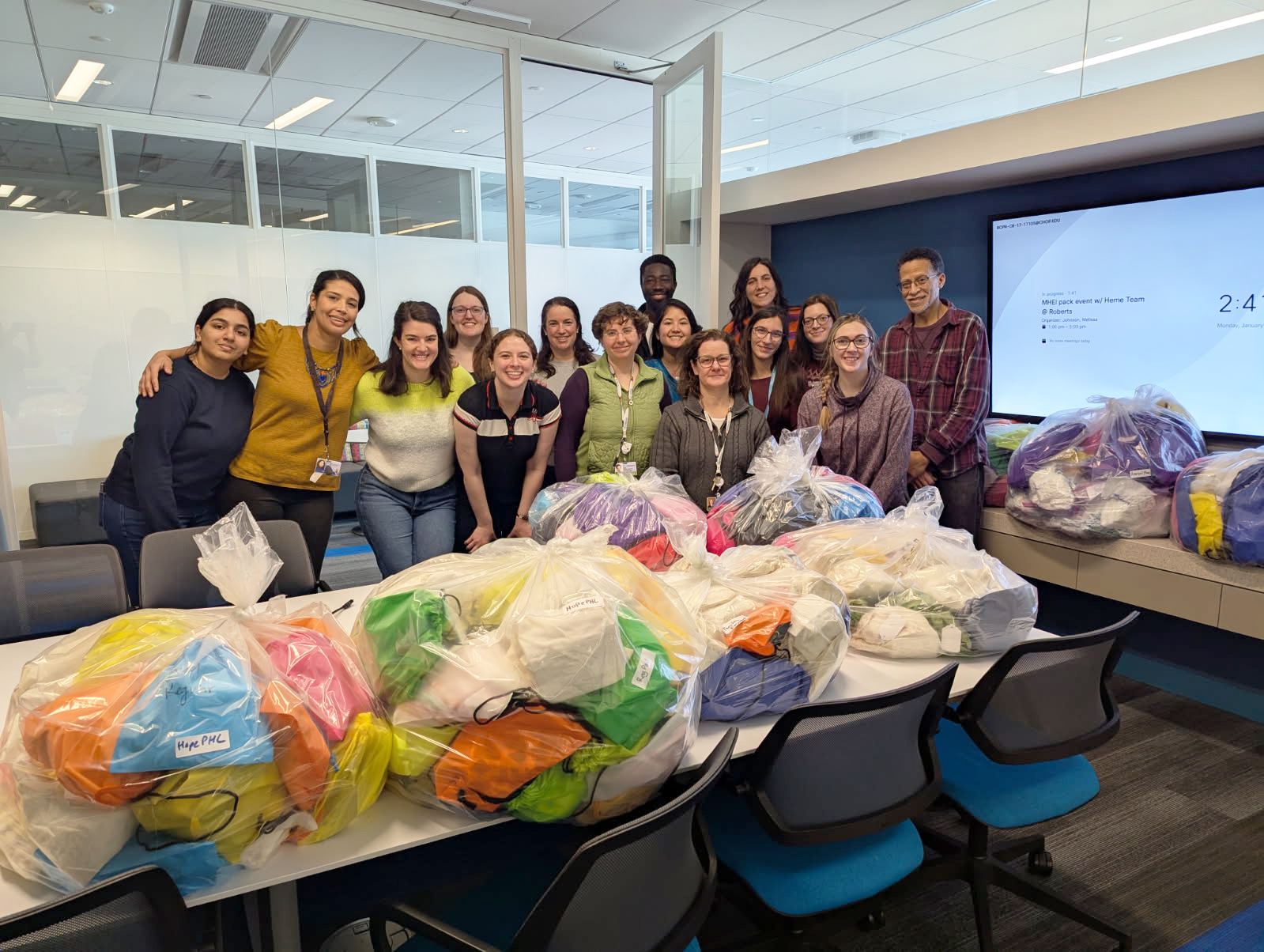
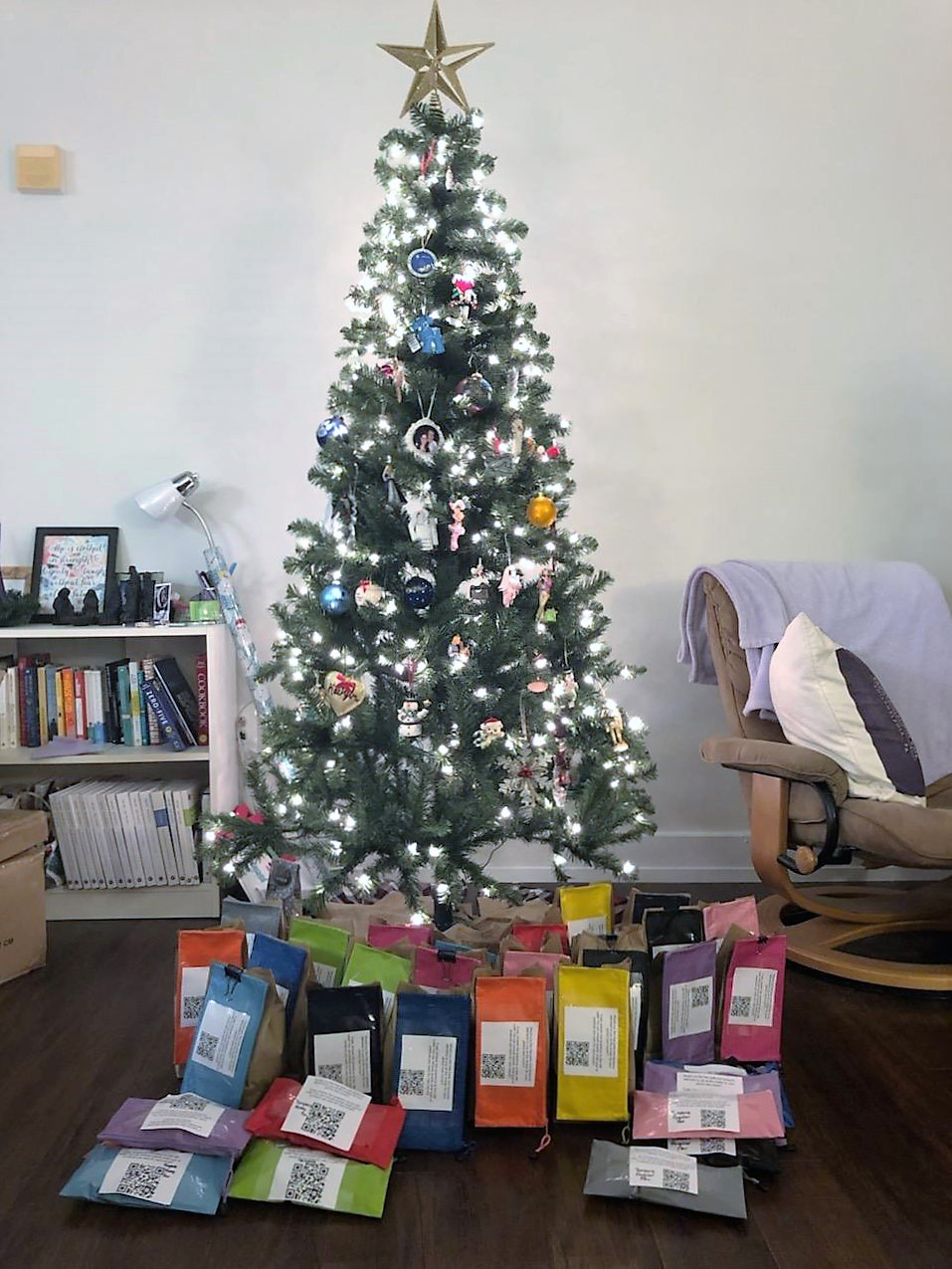
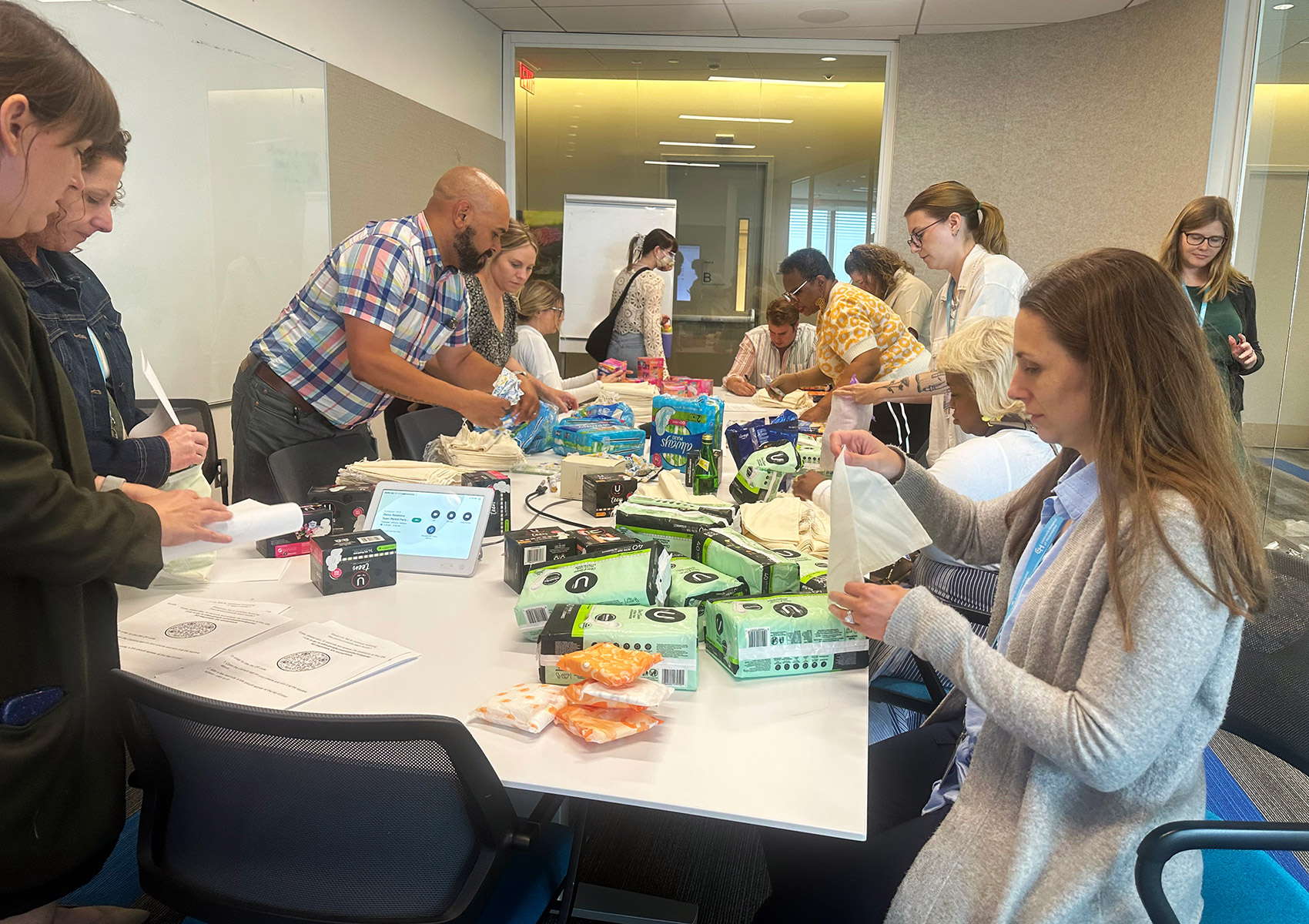
The Period Project relies on monetary donations, period product drives and in-kind donations to stay stocked and sustainable. Teams across CHOP and external partners support the effort by collecting donations and assembling kits at monthly volunteer events.
The project has also received support from the CHOP Foundation’s Helping Hands Community Care Challenge, with corporate volunteers joining in. These changemakers show how small actions can fight big inequities.
Encouraging Early Literacy: Books for Babies
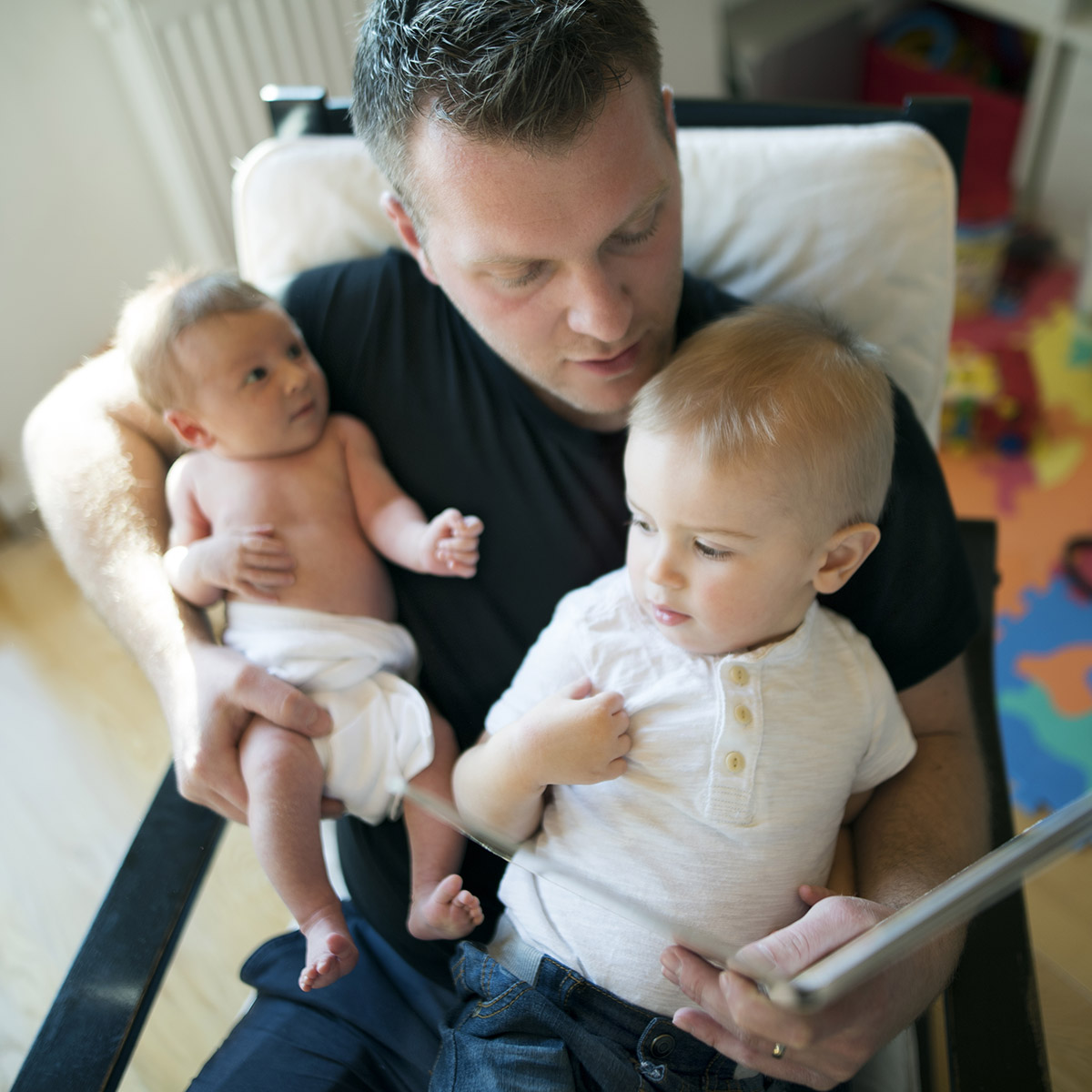
When it comes to reading to children, it's never too early to start. The American Academy of Pediatrics (AAP) recommends pediatricians “use a robust spectrum of options to support and promote literacy.”
CHOP's Books for Babies program is designed to begin a child's journey to literacy. “We know that reading with young children results in improved language skills in toddlers and improves school readiness,” says Shelia Knerr, MD, a CHOP Pediatric Hospitalist who led the creation of the program. Learn More
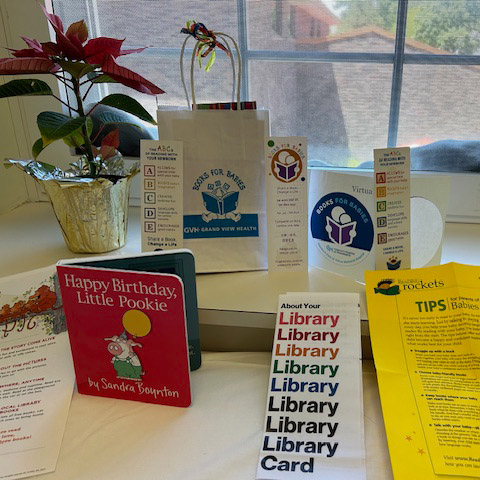
It's in the bag!
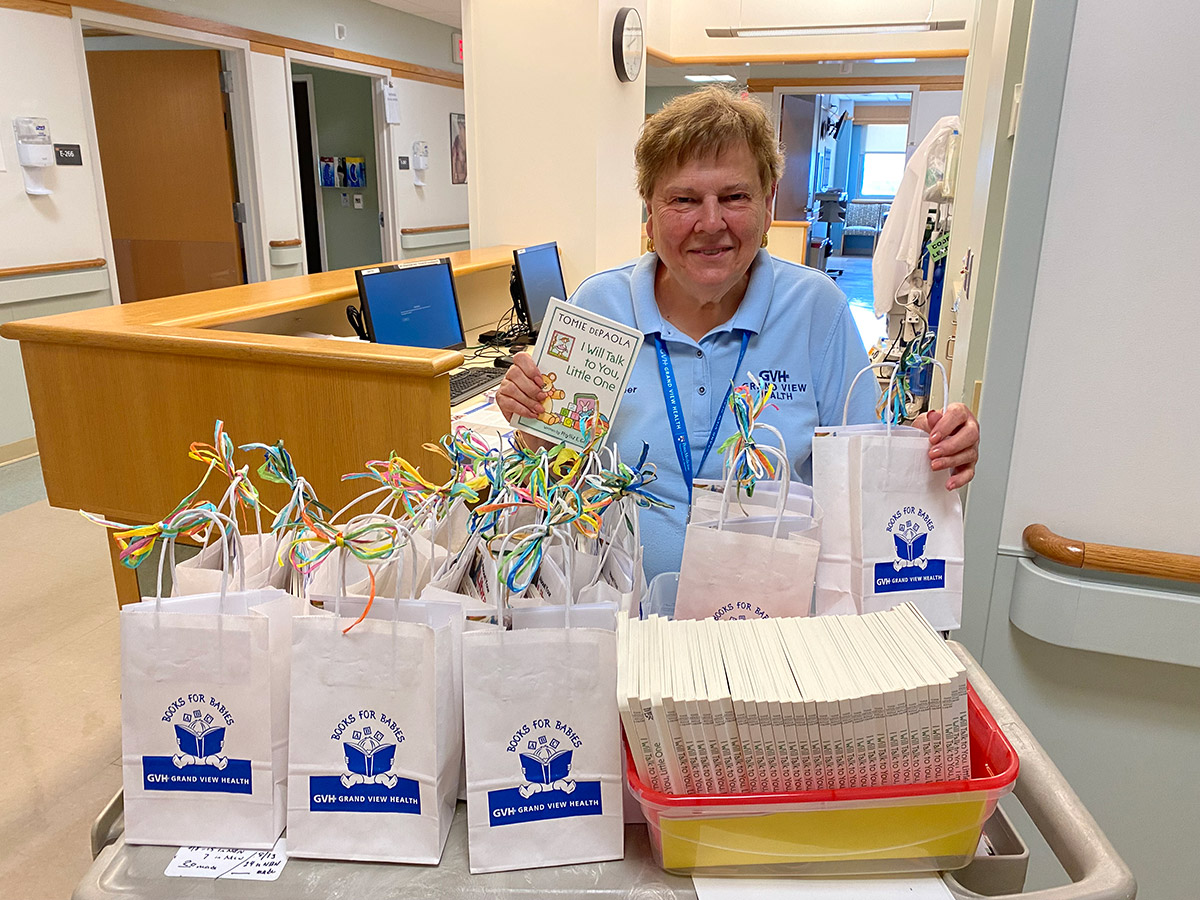
Through the Books for Babies program, parents of newborns receive a gift bag that includes a board book, a bookmark, an application for a library card at their local library, and information on the well-established benefits of reading to their newborn.
This was an incredible journey that began, grew and continues to prosper due to the ongoing support of the CHOP Community Impact department, the CHOP grants programs, and the commitment of the whole CHOP enterprise to help their employees support children and families in their communities.
Sheila Knerr, MD, Books for Babies Founder
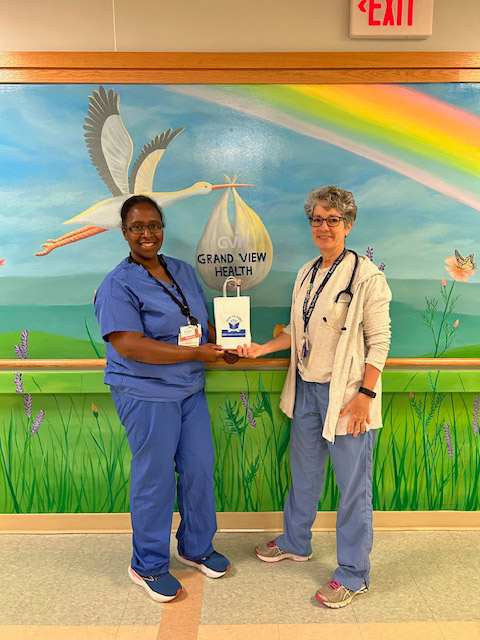
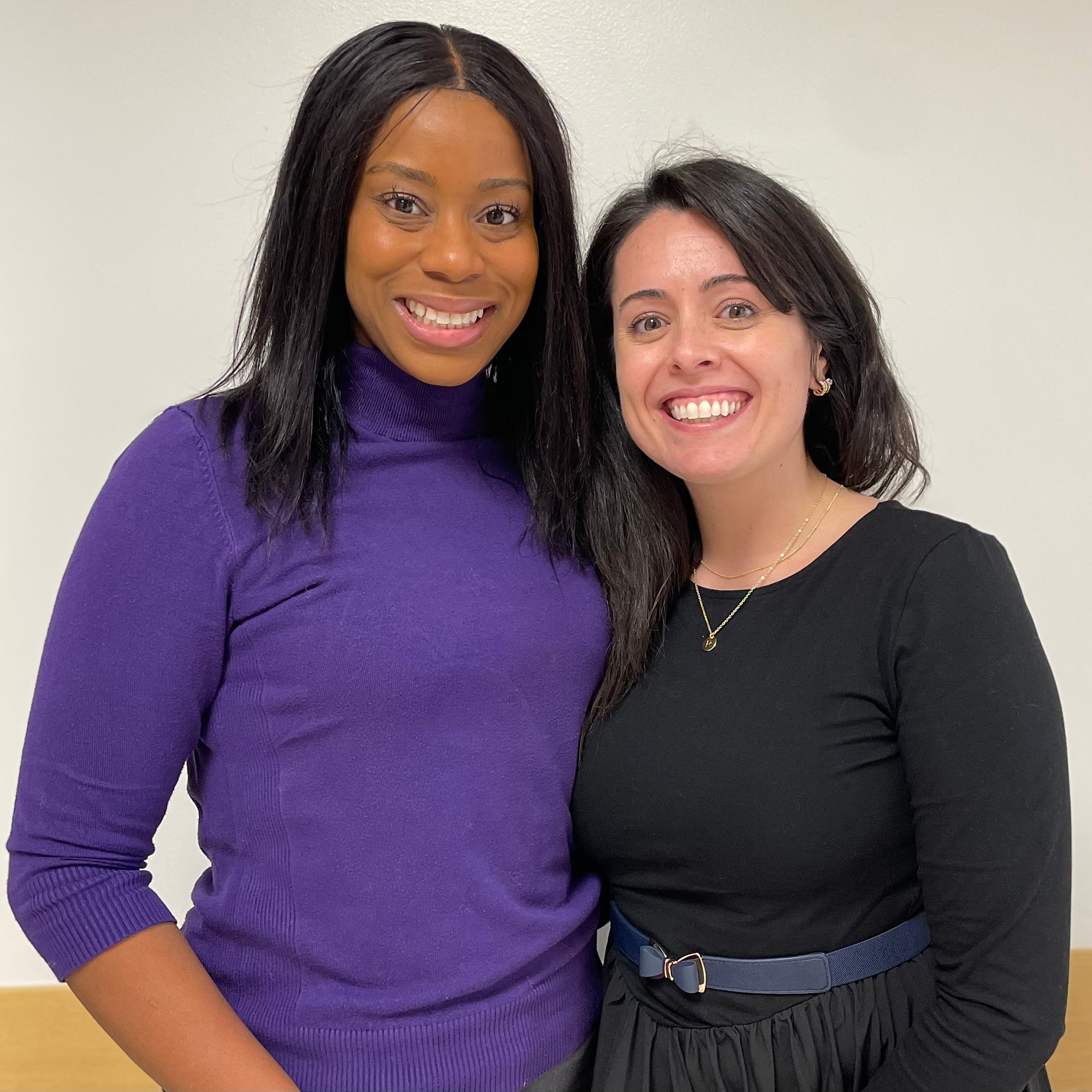
Dr. Knerr recently retired from her role as a CHOP Pediatric Hospitalist and passed the torch of Books for Babies leadership to Koryse Woodrooffe Ekouevi, MD, a CHOP neonatologist at Grand View Health, pictured left.
Learn more about CHOP's literacy programs
Healthy Food, Healthy Childhood
When a family doesn't have the resources to put nutritious food on the table, providing a bag of groceries just answers an immediate problem. The Food as Medicine program takes a broader approach that includes nutrition education for families and activities for kids so they're learning about healthy food while having fun. And it happens right where the kids receive their healthcare: The Nicholas and Athena Karabots Primary Care Center, Norristown.
The program began when social worker Victoria Armstrong saw Norristown families facing food instability coming out of the pandemic. Learn More
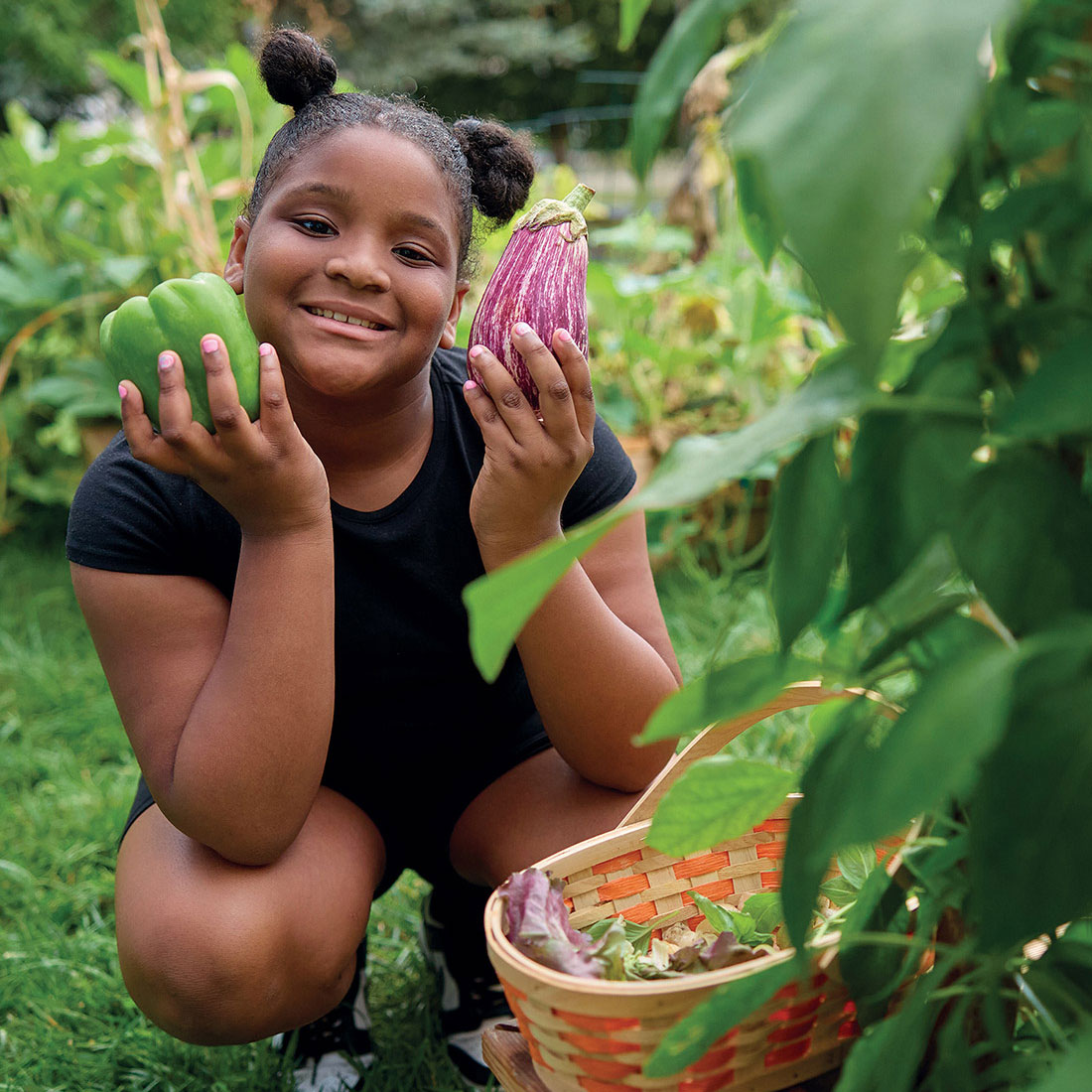
Food — and So Much More for Families
Families Enrolled in Food as Medicine receive:
- Weekly delivery of fresh produce May through November, complete with info on what's in the box and recipes to try
- Twice monthly delivery of nonperishable groceries
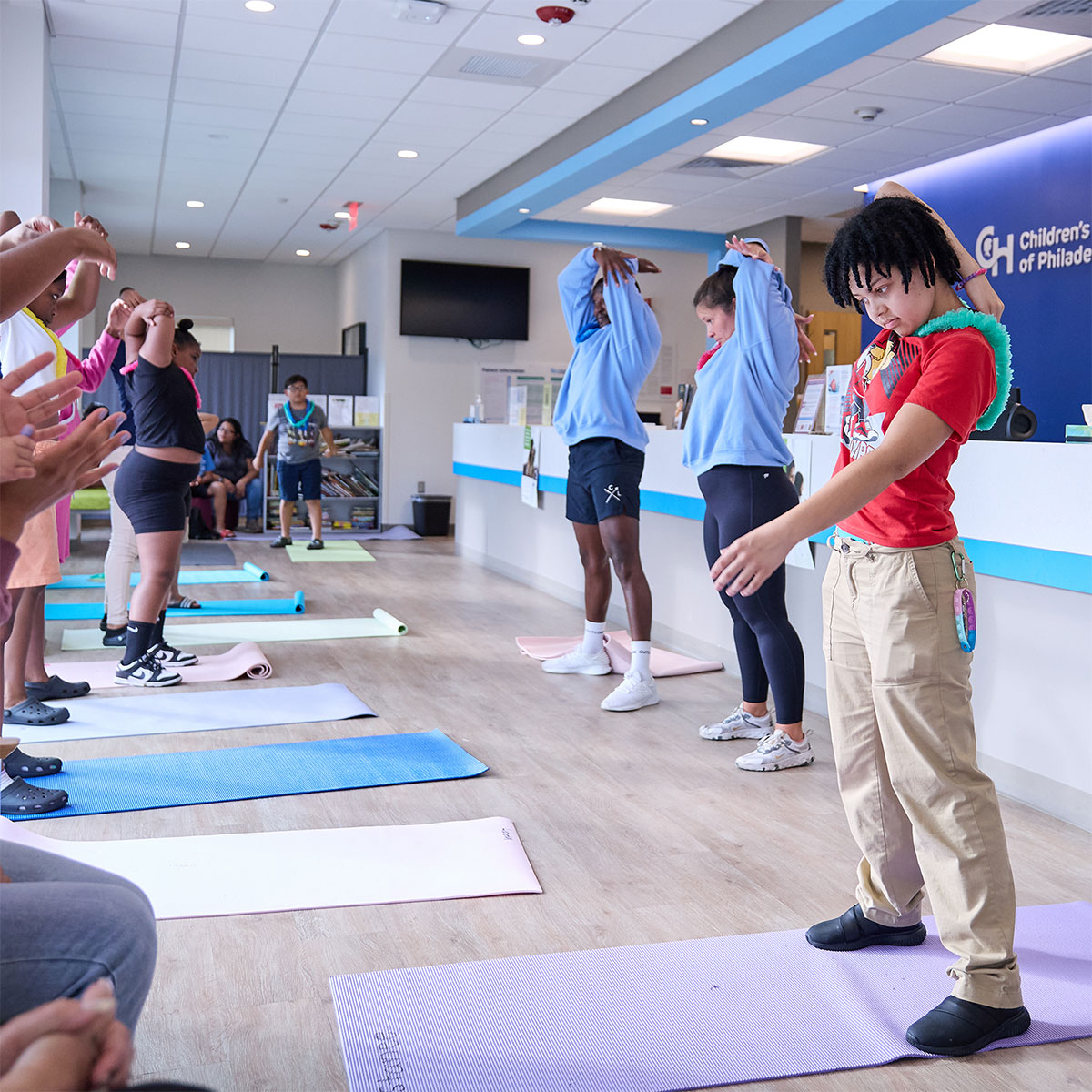
- Monthly family sessions with exercise, story time, gardening, cooking demonstrations and dinner
- Cooking equipment that includes cutting boards, knives, grater, pots, pans and more, plus a cookbook of family-friendly, healthy fare
- Monthly children's book related to gardening or healthy eating
- Yoga mat and water bottle for each child
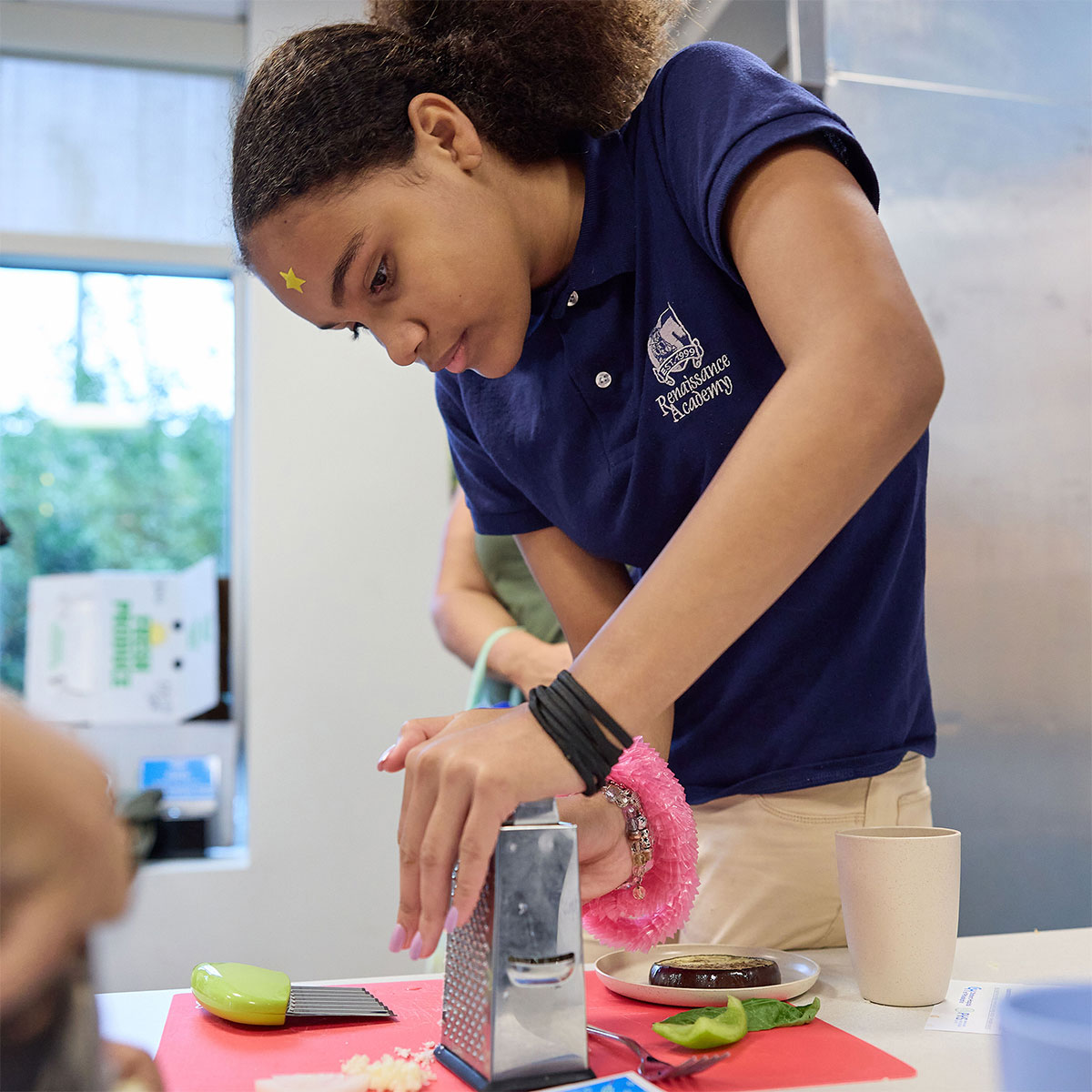
It Takes a Village to Offer Family Nights
Community partners that support Food as Medicine:
- Cutloose Cares and leaders Jordan and Emily Deane
- Pennsylvania Horticultural Society, which provided the on-site garden, cooking demonstrations and weekly produce boxes
- Martha's Choice Marketplace, a Catholic Social Services food pantry in Norristown
- Norristown-area restaurants
- Reach Out and Read and other CHOP volunteers
Learn About CHOP's Food-related Programs
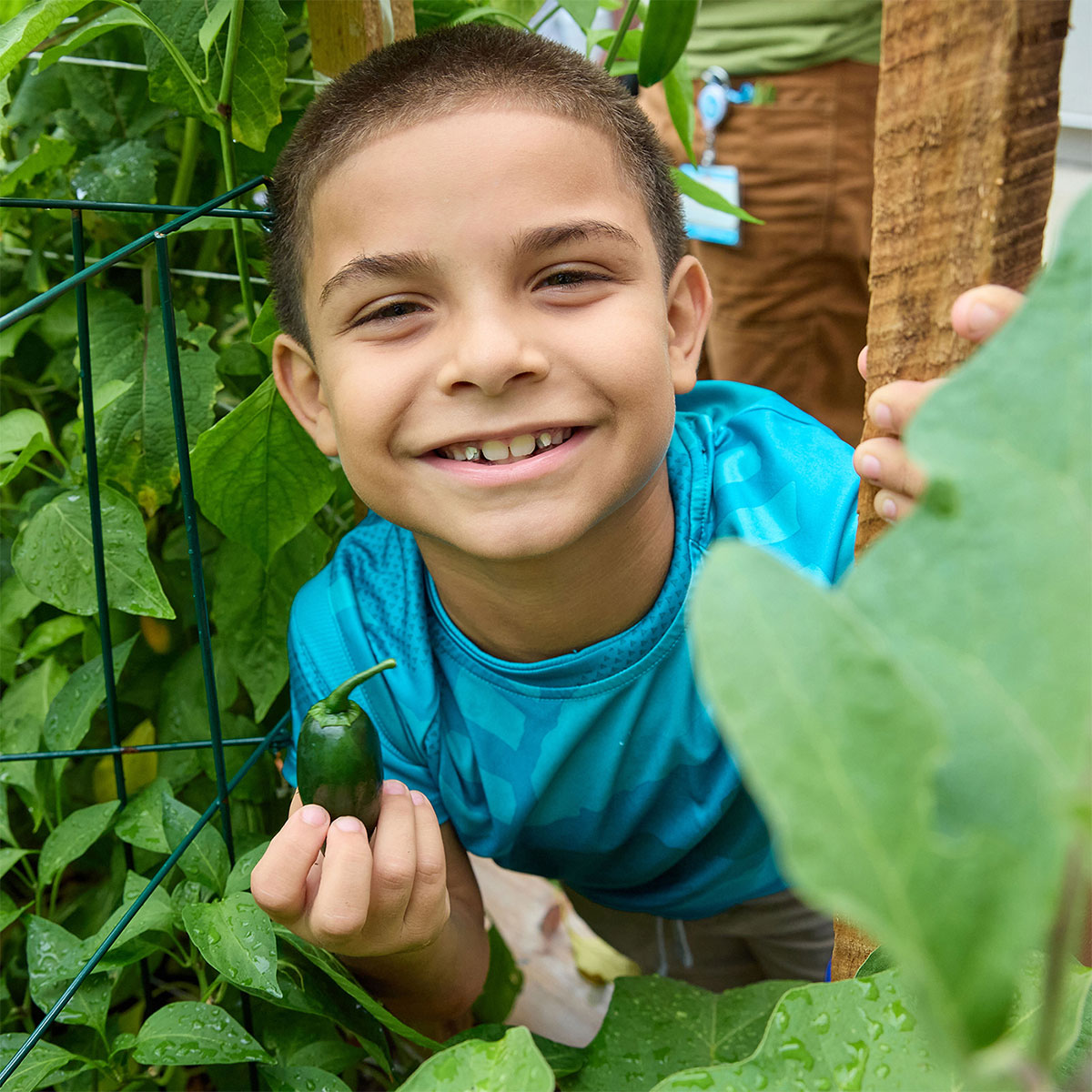
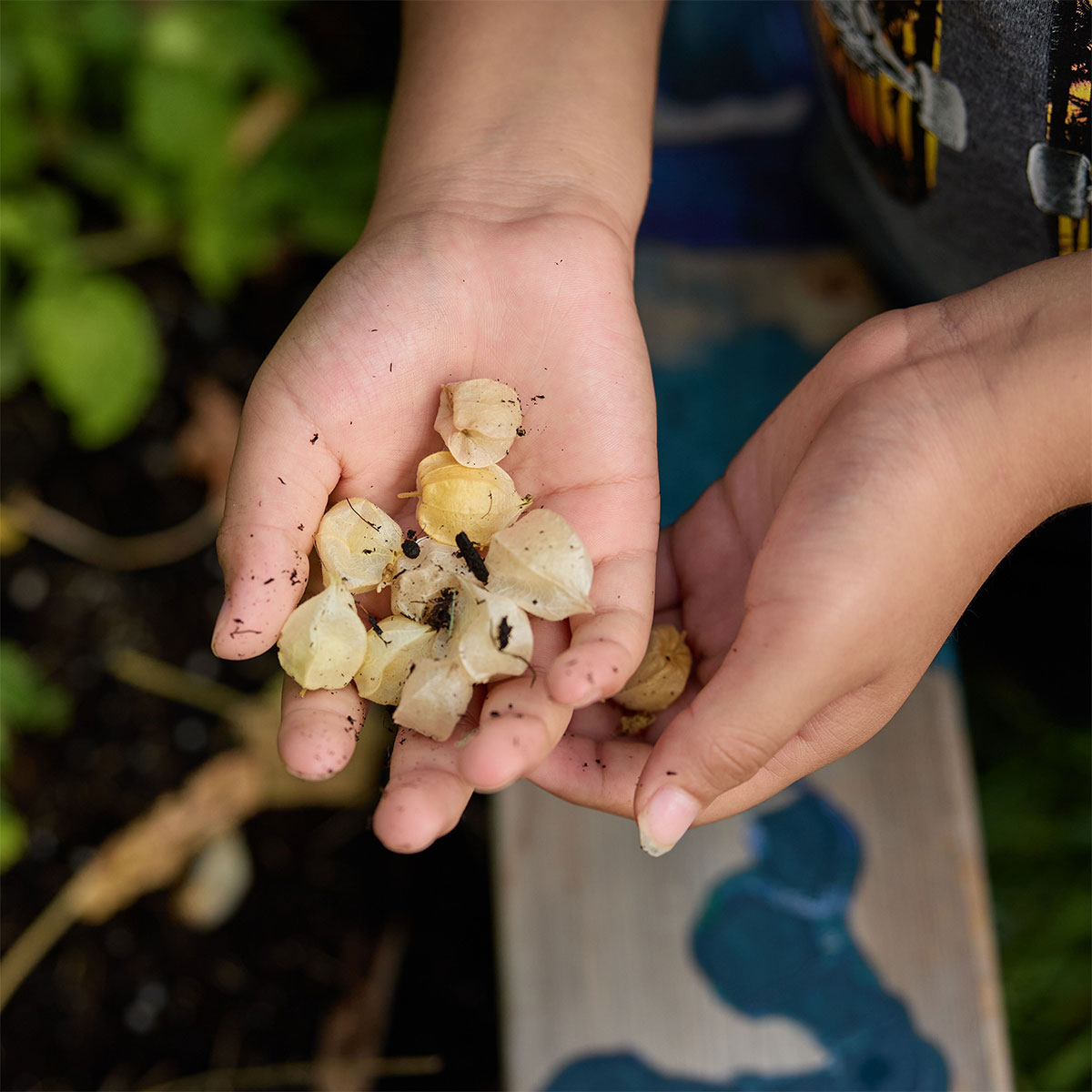
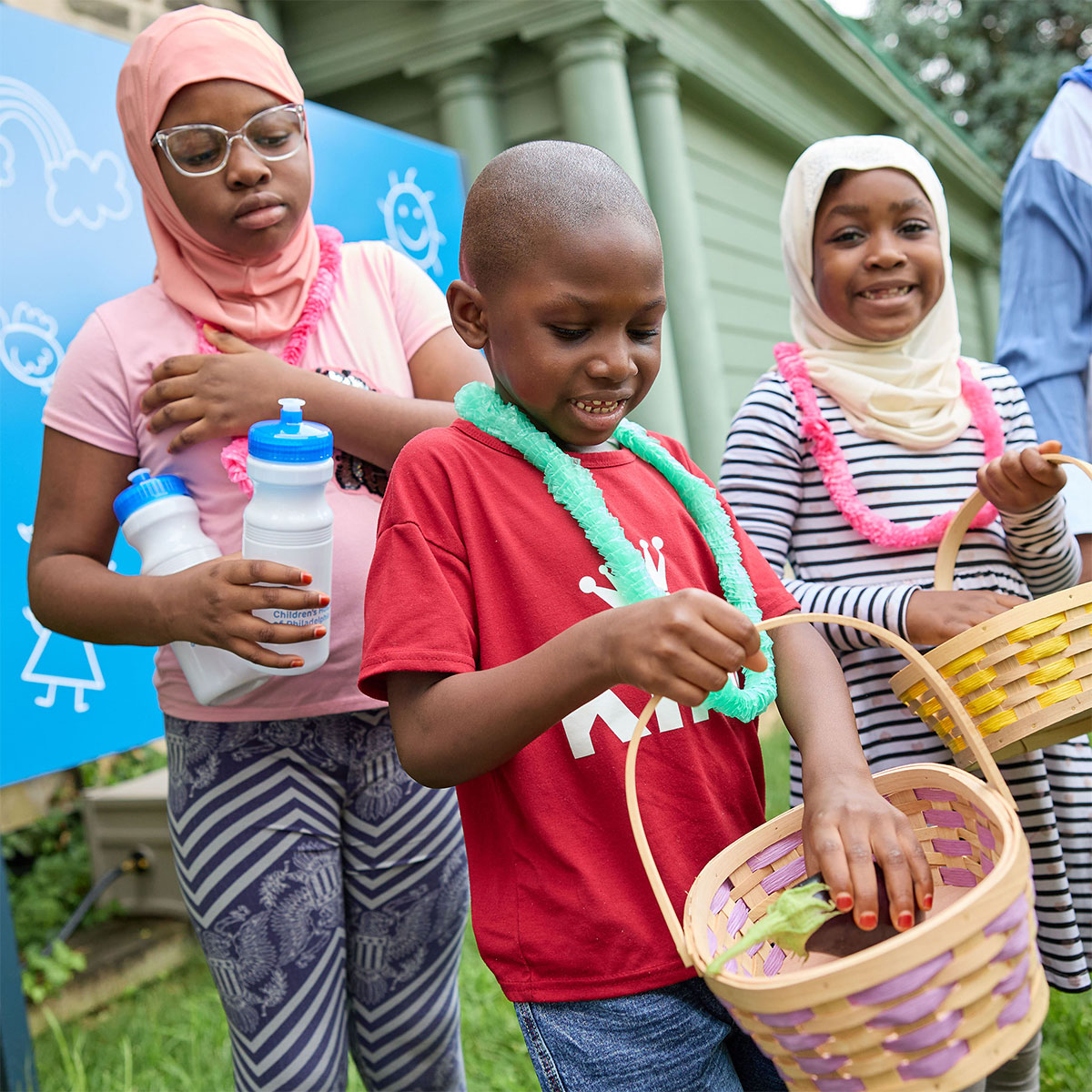
Photos of a Food as Medicine family night
Promoting Wellness Equity to Help Kids BE-WEHL
Mental health is vital to overall well-being, and mind-body practices are effective tools for enhancing it. Recognizing this, Children's Hospital of Philadelphia (CHOP) launched the Integrative Health (IH) Program 10 years ago to incorporate wellness practices such as yoga, massage, aromatherapy and acupuncture into patient care.
Now, IH is bringing the benefits of these practices into the community through their Behavioral Health — Wellness Equity for a Healthy Life (BE-WEHL) program. Learn More
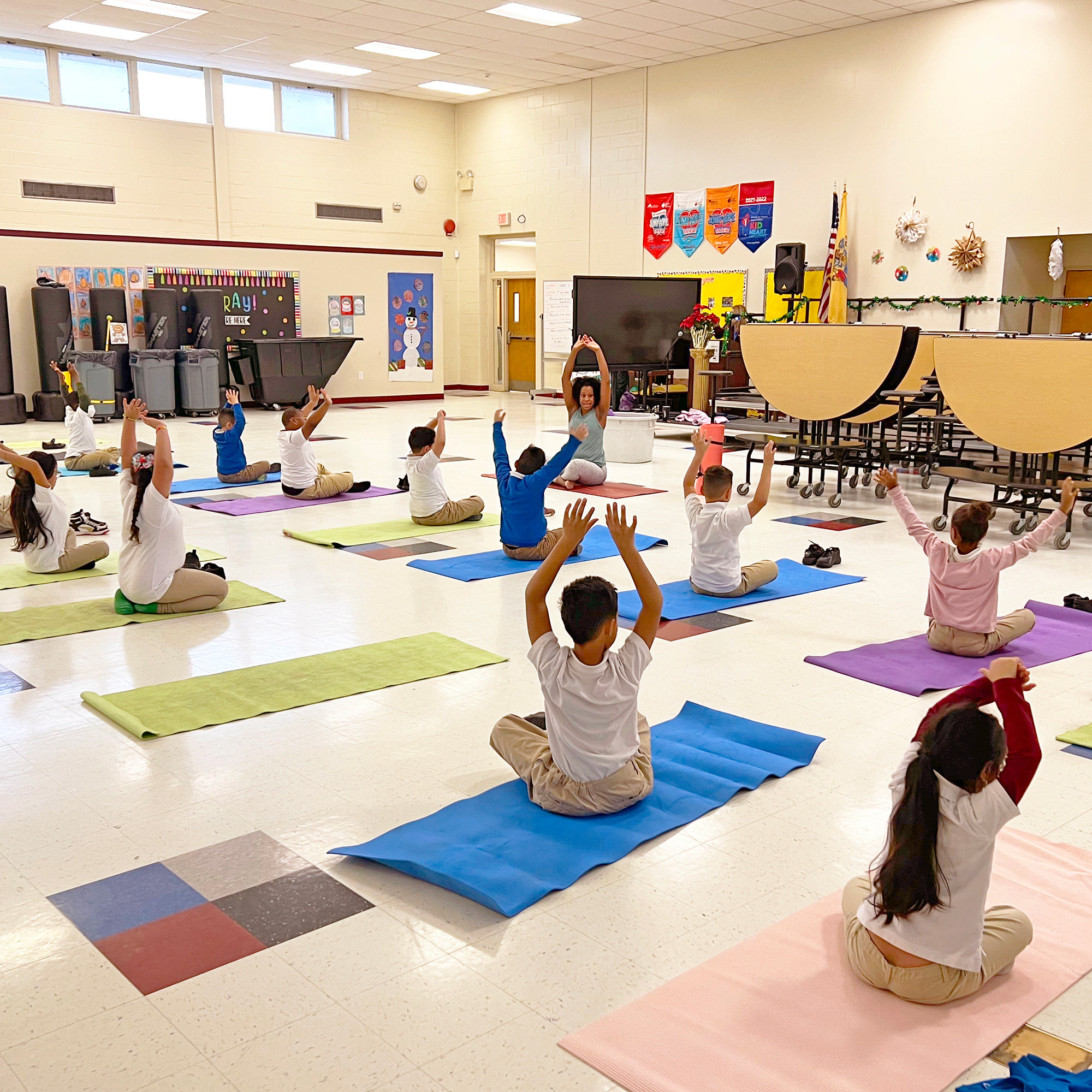
Launched in 2020
The BE-WEHL program offers a comprehensive seven-session curriculum designed to help children and families in under-resourced communities manage stress and cope with life's challenges. The curriculum covers mindfulness, nutrition, sleep, physical activity, yoga, self-massage, breathwork, nature and progressive muscle relaxation.
It was developed by experts from Integrative Health to address the unique needs of communities with higher levels of trauma and limited access to behavioral health professionals for children and adolescents.
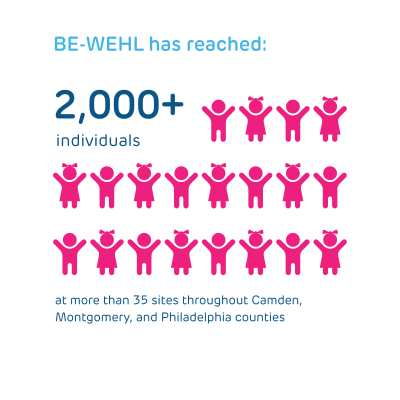
By the Numbers
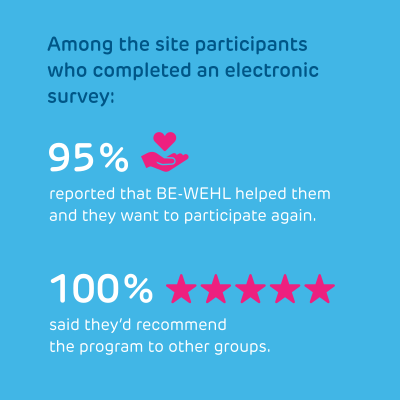
BE-WEHL is unique in that we're not talking about a disease-specific thing. The focus is on stress, wellness and mindfulness. That allows us to be flexible and adapt the program, while always focusing on children.
Complementary therapies, like yoga, massage, aromatherapy and acupuncture, are traditionally accessed by affluent populations, so as a team we really wanted to find a way to systematically make these practices more available to populations living in underserved areas.
Growth Since Launch
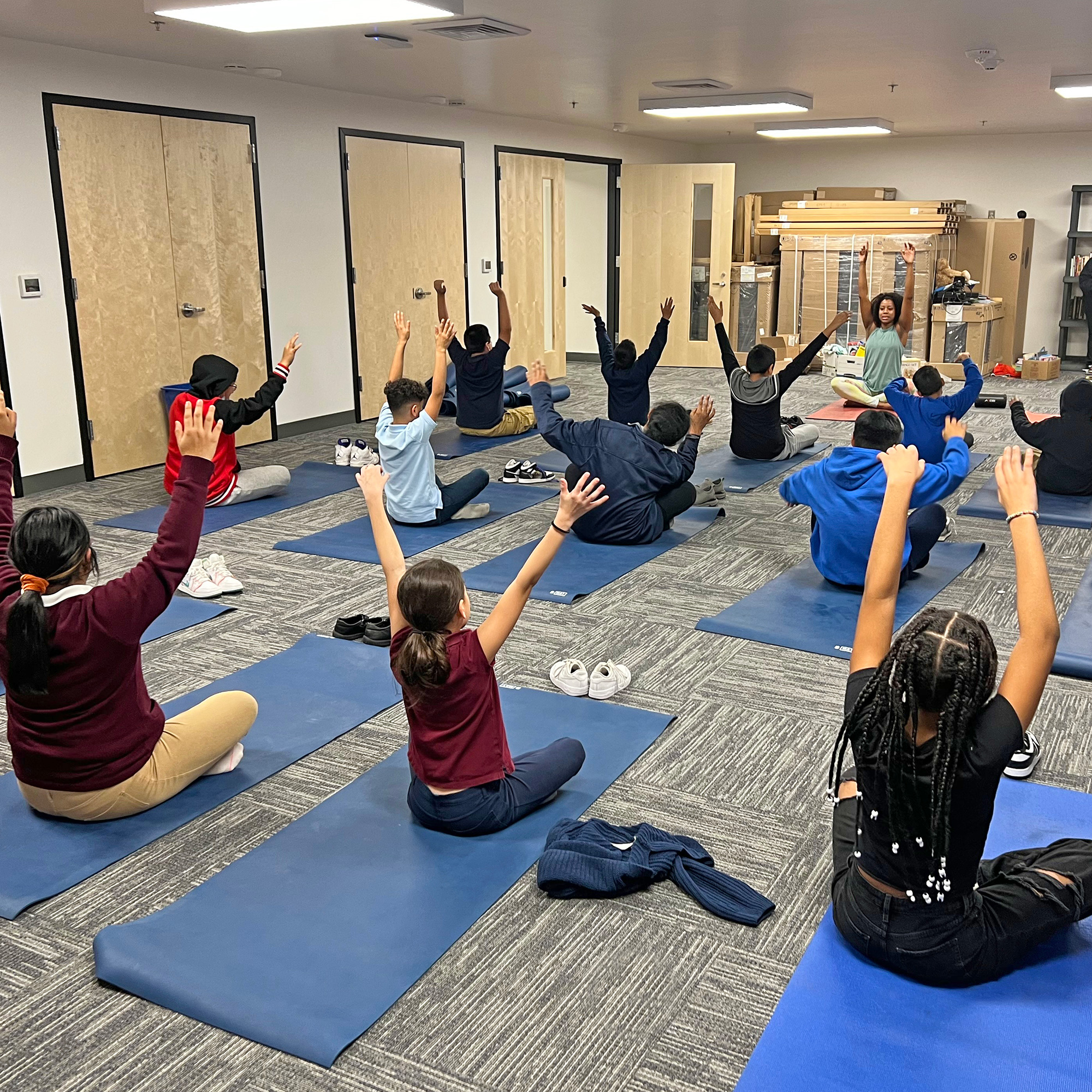
BE-WEHL has continuously evolved to maximize its impact and sustainability. Initially focused on offering one-on-one virtual classes for CHOP patients with behavioral health challenges and their families, the program expanded in 2022 with support from CHOP's Office of Community Impact. This funding enabled BE-WEHL to bring its curriculum into elementary schools, reaching children ages 5-14.
More recently, the program introduced professional training workshops empowering educators at early childhood centers to adopt wellness practices to manage their own stress and teach these strategies to children.

Guns and Kids: A Deadly Mix
Every day, eight children suffer gunshot wounds because of improperly stored or misused guns in the home. Eighty percent of teens who use a firearm to commit suicide use a family member’s gun.
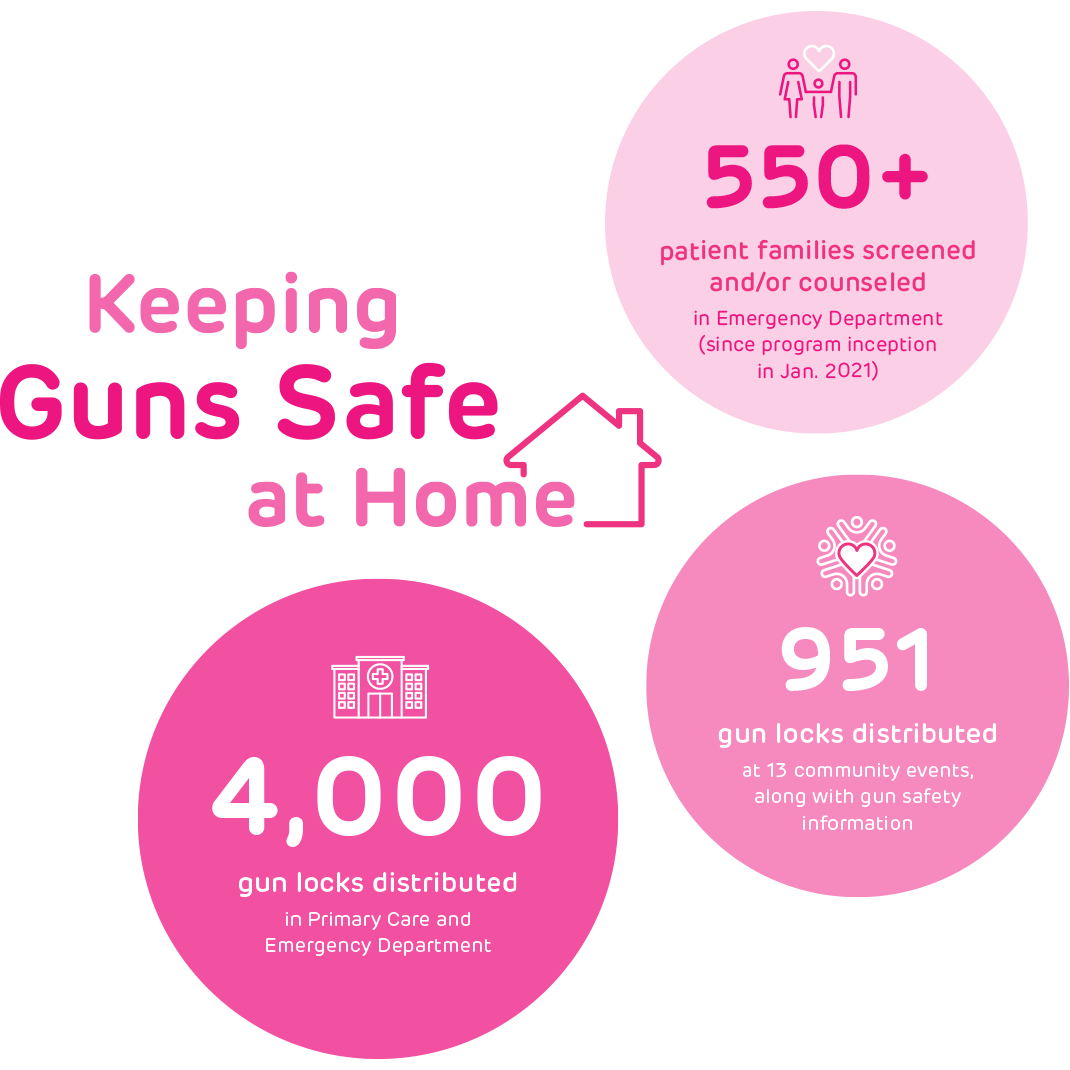
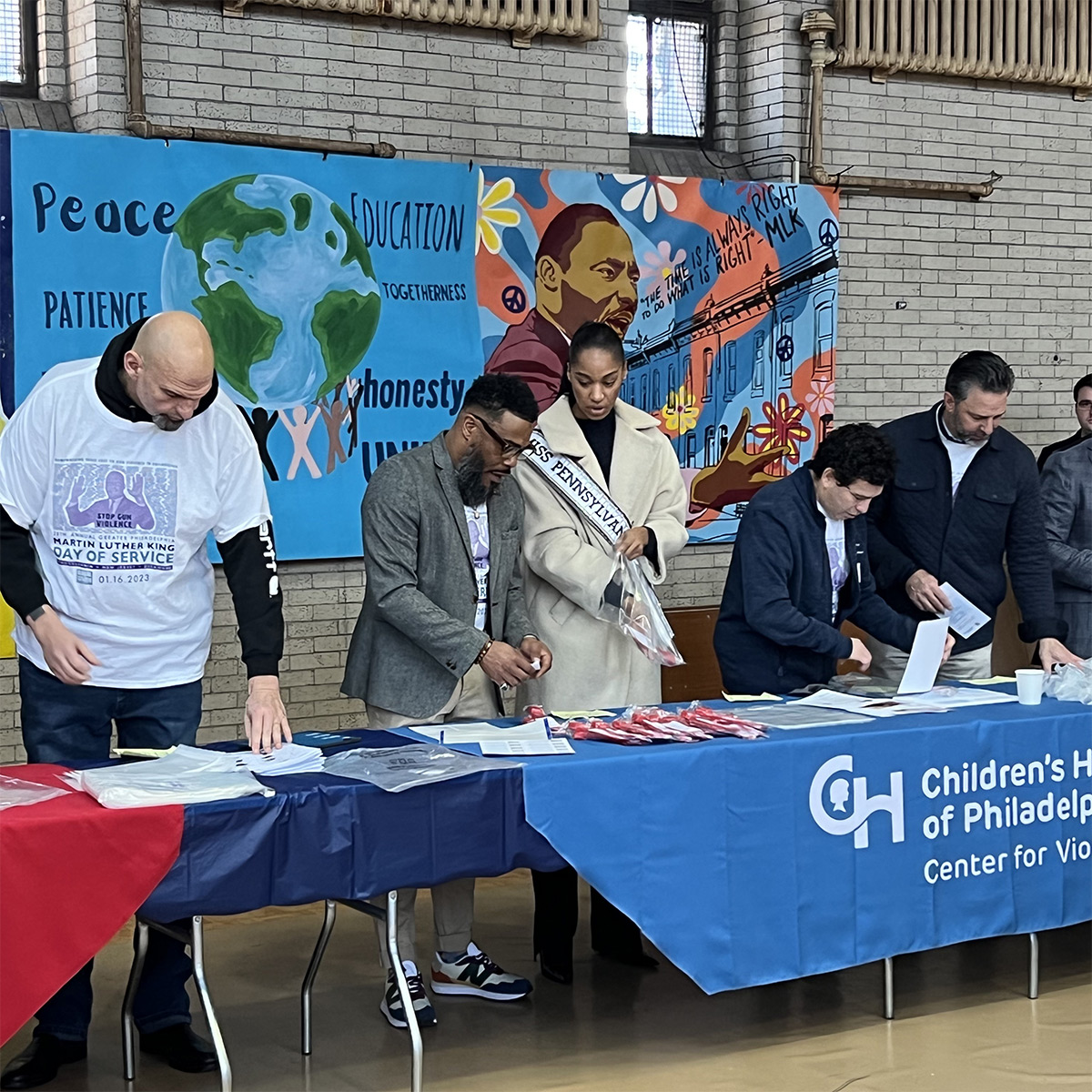
The Center for Violence Prevention partners with community organizations to reduce those numbers by sharing information on how to safely store firearms and handing out hundreds of free gun locks at community events across Philadelphia. CVP also provides these resources to families during primary care and emergency room visits at CHOP. Learn More

Reaching Out to Families
CHOP’s Gun Safety Program talks to families in primary care offices, the ER and their communities.
Partnership for Playgrounds
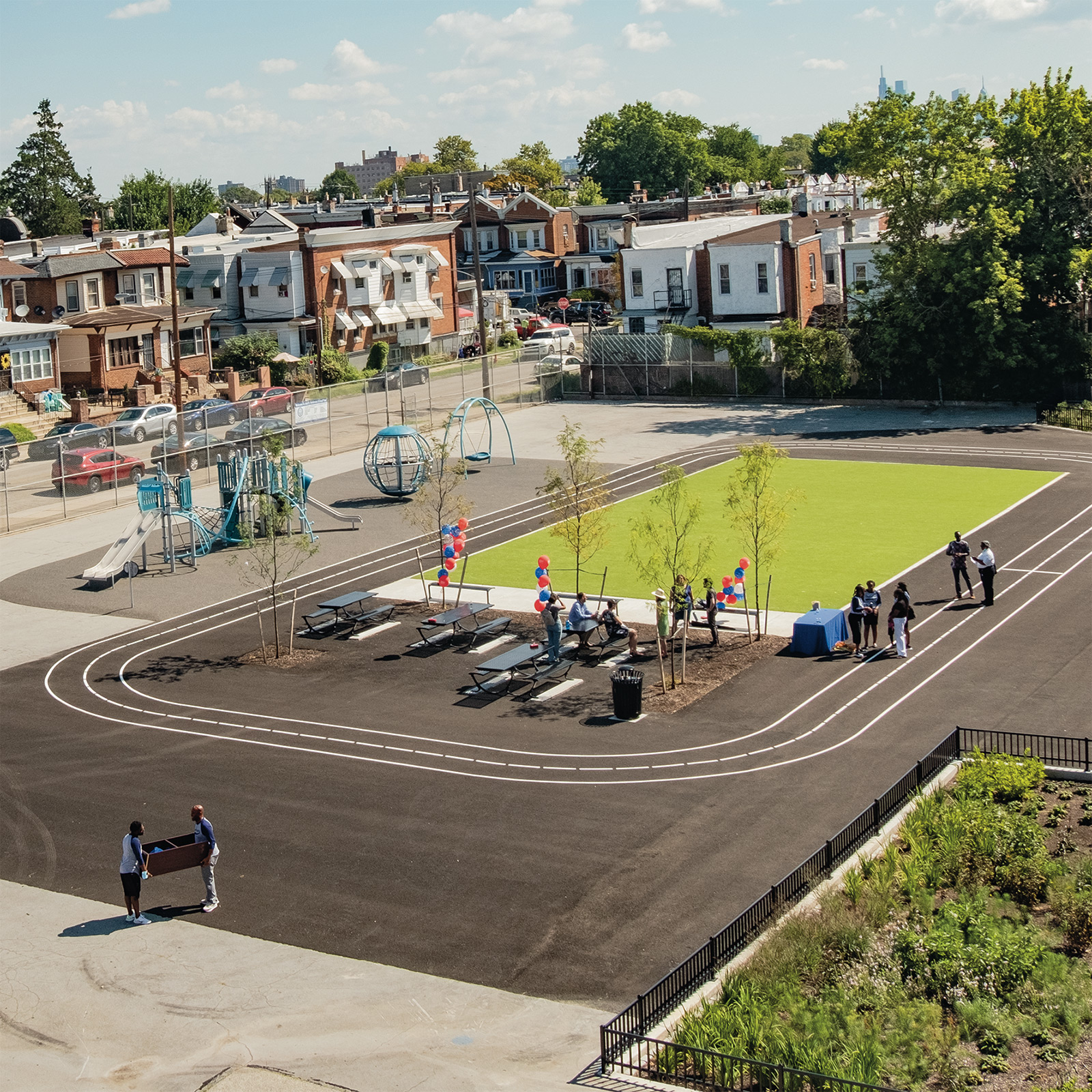
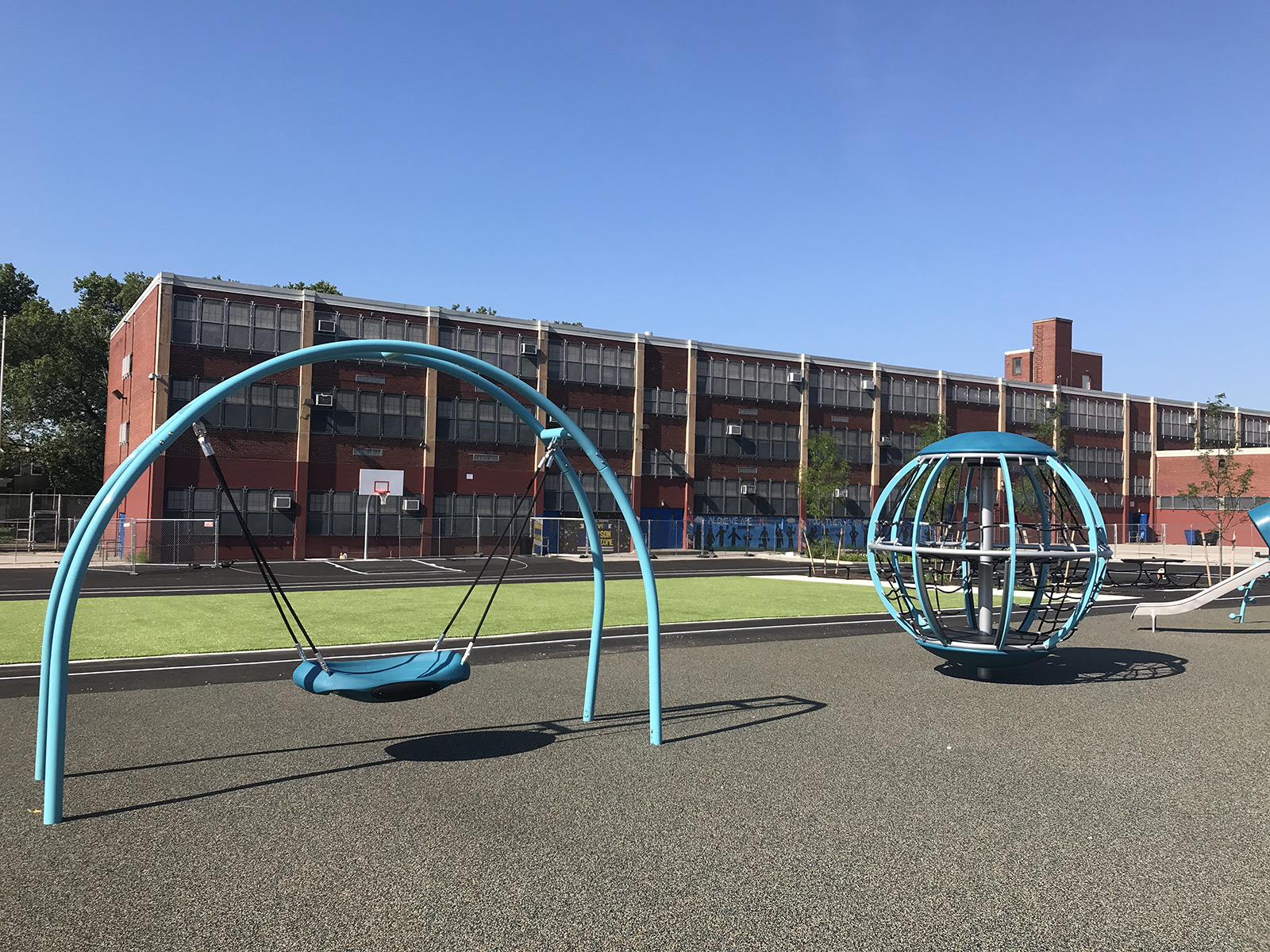
Collaboration among the Healthier Together Initiative at CHOP, the Trust for Public Land and Add B. Anderson Elementary School’s principal and other stakeholders — with design help from the school’s students — turned a half an acre of asphalt into a haven that supports active play and encourages spending time outdoors.
The project also brings a safe space to the Cobbs Creek neighborhood, providing a meeting place for community events beyond the school’s operations. Learn More